
Recording clean, professional vocals at home has never been more accessible. Affordable microphones, compact audio interfaces, and powerful software mean anyone can set up a vocal booth in a spare room. Yet one question still divides musicians, podcasters, and voice-over artists alike: egg crate foam or pyramid foam, which is better for vocals?
If you have browsed acoustic treatment panels online, you have likely seen both profiles. They look similar at first glance, but the surface design influences how they absorb sound. The right choice can reduce echo, tame harsh reflections, and improve vocal clarity. The wrong choice can leave your recordings boxy or hollow.
This guide breaks down the differences between egg crate foam and pyramid foam, how each performs in vocal recording environments, and which profile suits your setup.
Understanding Acoustic Foam and Vocal Recording
Before comparing profiles, it helps to understand what acoustic foam actually does.
Acoustic foam is designed to absorb mid and high frequencies. It reduces reflections that bounce off walls and back into your microphone. These reflections cause:
- Flutter echo
- Room reverb
- Harshness in high frequencies
- Reduced vocal clarity
Foam does not soundproof a room. It will not block external noise like traffic or neighbours. Instead, it controls the acoustics inside the room.
For vocals, controlling reflections is essential. A dry, controlled environment allows your voice to sit clearly in the mix, whether you are singing, podcasting, or recording dialogue.
What Is Egg Crate Foam?
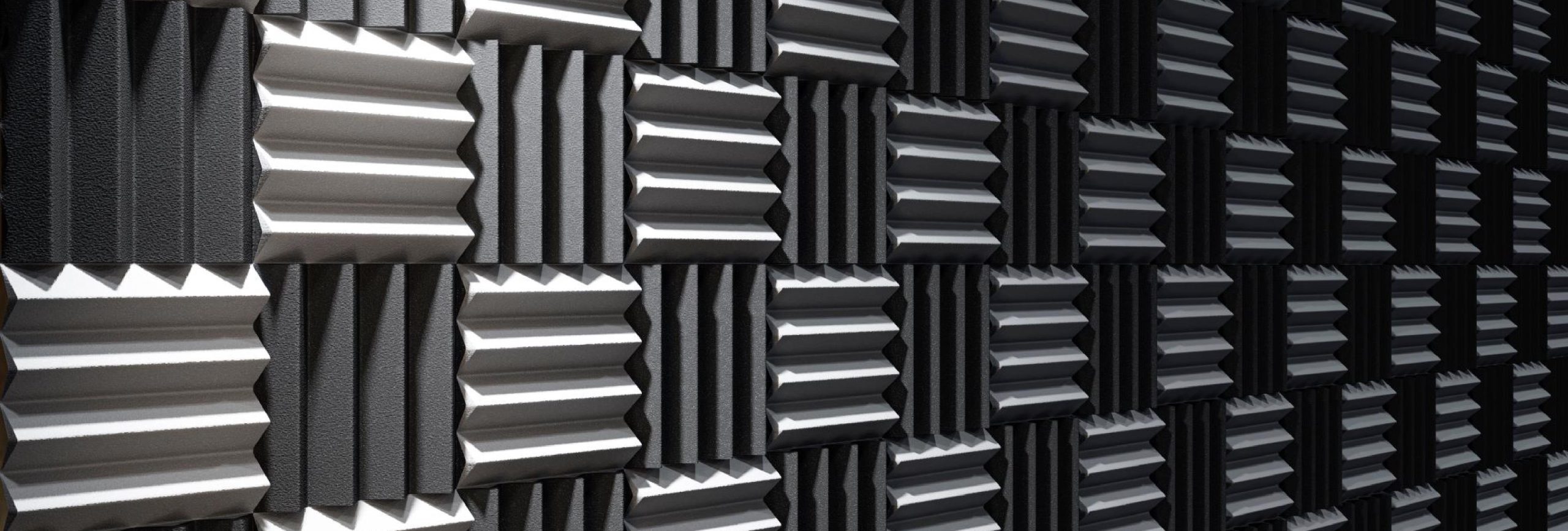
Egg crate foam features a wavy, rounded surface pattern that resembles an egg carton. The peaks and valleys increase surface area, helping the material absorb sound waves.
Key Characteristics of Egg Crate Foam
- Rounded wave-like profile
- Typically affordable
- Lightweight and easy to install
- Common in budget home studios
Because of its curved design, egg crate foam disperses sound slightly while absorbing mid and high frequencies. It is often marketed as a beginner-friendly acoustic solution.
How Egg Crate Foam Performs for Vocals
Egg crate foam works reasonably well in small vocal setups where the main goal is to reduce echo. It helps soften harsh reflections, especially in untreated bedrooms or home offices.
However, the rounded surface means absorption is less focused compared to sharper profiles. In practical terms:
- Good for reducing flutter echo
- Moderate absorption of high frequencies
- Limited control over lower mid frequencies
- Slightly less efficient than pyramid foam of the same thickness
If you are recording spoken word or casual vocals, egg crate foam can offer noticeable improvement over bare walls.
What Is Pyramid Foam?
Pyramid foam features pointed peaks arranged in a grid pattern. The sharper geometry increases surface area and creates more angles for sound waves to hit and dissipate.
Key Characteristics of Pyramid Foam
- Angular pyramid profile
- Slightly more uniform absorption
- Often available in professional studio kits
- Visually striking design
The sharper peaks break up sound reflections more aggressively than rounded egg crate waves.
How Pyramid Foam Performs for Vocals
For vocal recording, pyramid foam typically provides:
- Stronger high-frequency absorption
- Better diffusion of reflections
- More controlled sound in small booths
- Slightly improved clarity compared to egg crate
Because the surface angles vary, sound waves are less likely to bounce directly back toward the microphone. This can result in a tighter, more polished vocal tone.
Egg Crate vs Pyramid Foam: Head-to-Head Comparison
1. Absorption Efficiency
When thickness is equal, pyramid foam usually performs marginally better. The sharper peaks create more interaction between sound waves and the foam surface.
For vocals, this difference can translate into slightly cleaner recordings, particularly in untreated rooms.
Winner for vocals: Pyramid foam
2. Aesthetic Appeal
Egg crate foam has a softer, rounded appearance. Pyramid foam looks more structured and professional.
If your studio doubles as a filming space for YouTube or livestreams, pyramid foam often looks more refined on camera.
Winner: Pyramid foam
3. Cost
Egg crate foam is usually cheaper. It is widely produced and often sold in bulk packs.
If you are treating a large wall on a tight budget, egg crate foam offers cost-effective coverage.
Winner: Egg crate foam
4. Installation
Both profiles install in the same way, typically using:
- Adhesive spray
- Double-sided mounting tape
- Acoustic panel clips
There is no significant difference in installation difficulty.
Winner: Tie
5. Suitability for Small Vocal Booths
In compact spaces, reflections build up quickly. Pyramid foam’s angular design helps scatter these reflections more effectively.
Egg crate foam still works, but it may require slightly more coverage to achieve similar results.
Winner: Pyramid foam
Does Foam Profile Really Matter for Vocals?
Here is the important truth. Thickness and placement matter more than surface shape.
A 50 mm thick egg crate panel will outperform a 25 mm pyramid panel. Foam depth determines how much energy the material can absorb.
For vocals, aim for:
- At least 50 mm thickness
- Coverage at reflection points
- Treatment behind and beside the microphone
- Soft furnishings to assist absorption
If budget forces a choice between thicker egg crate or thinner pyramid, choose thickness over profile.
Ideal Setup for Vocal Recording
To get the best results from either profile, follow these practical guidelines.
Treat Reflection Points
Place foam:
- Directly behind the microphone
- On the wall in front of the vocalist
- On side walls at mouth height
- On the ceiling if possible
This reduces early reflections that colour your vocal tone.
Combine Foam with Other Treatment
Acoustic foam handles mid and high frequencies. For a fuller sound:
- Add bass traps in corners
- Use thick curtains over windows
- Lay a rug on hard floors
Balanced treatment creates a natural vocal response.
Avoid Over-Treatment
Covering every surface with foam can make vocals sound dull or lifeless. Aim for control, not total deadness.
When to Choose Egg Crate Foam
Egg crate foam is a good option if:
- You are building a budget home studio
- You need basic echo reduction
- You are recording podcasts or voiceovers
- Aesthetics are less important
It provides solid entry-level acoustic control without a large investment.
When to Choose Pyramid Foam
Pyramid foam makes sense if:
- You want slightly better high-frequency control
- You are recording music vocals regularly
- Your room is small and reflective
- You want a more professional studio look
For serious vocal work, pyramid foam often edges ahead.
Common Misconceptions About Acoustic Foam
Foam Soundproofs a Room
Acoustic foam does not block sound transmission. To stop outside noise, you need dense materials such as mass-loaded vinyl or additional structural insulation.
All Foam Is Equal
Low-density foam can crumble quickly and absorb less sound. Always check:
- Density rating
- Thickness
- Fire resistance certification
Higher quality foam lasts longer and performs better.
The Verdict: Which Profile Is Best for Vocals?
For most vocal recording situations, pyramid foam offers a slight advantage due to its angular design and more uniform absorption pattern. The difference is not dramatic, but in smaller untreated rooms, every improvement helps.
That said, egg crate foam remains a perfectly usable solution, especially when thickness and placement are optimised.
If you are choosing purely based on vocal clarity and performance, pyramid foam wins by a narrow margin. If budget and basic echo control are your priorities, egg crate foam does the job effectively.
Ultimately, successful vocal recording depends more on room setup than foam profile alone. Strategic placement, adequate thickness, and complementary acoustic treatment will shape your sound far more than surface design.
Quick Buying Checklist for Vocal Foam Panels
Before purchasing, confirm:
- Minimum 50 mm thickness
- High-density polyurethane foam
- Flame-retardant rating
- Enough coverage for reflection points
Treat the room thoughtfully, and your microphone will capture vocals that sound clear, intimate, and mix-ready.