
Gym Flooring and Rubber Gym Mats
Interlocking rubber and EVA foam gym flooring, rubber matting and impact tiles, cut and supplied from our Cape Town and Durban floors and delivered anywhere in South Africa.
What gym flooring actually has to survive
Gym floors take three different kinds of punishment and most flooring only handles one of them. There is constant foot traffic in circulation areas, static load from racks and machines that sit in one place for years, and dropped weight in the free weight area that arrives as a short, violent impact.
A floor specified for traffic will dent under a rack. A floor specified for load will split when a bar is dropped on it. Getting this right means matching the material and the thickness to the zone rather than covering the whole room in one product.
We supply both the rubber and the foam side of this, cut to the area you are covering, so you can specify different grades for different zones without dealing with two suppliers.
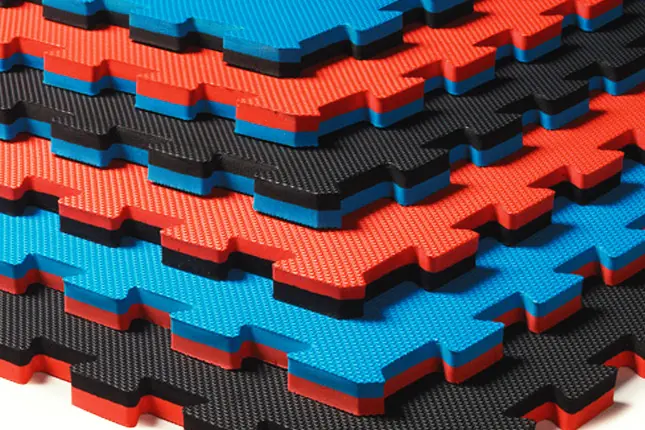
What we supply for gym floors
Specifying by zone
Rubber or foam?
Rubber, where weight is involved. Anywhere a barbell, dumbbell or plate can hit the floor, rubber is the only sensible answer. It absorbs the impact, protects the concrete underneath, and does not tear. It is also the heavier and more expensive of the two, so there is no point laying it in a studio.
Foam, where comfort is the point. Interlocking EVA is lighter, warmer underfoot and easier to lift and clean. It suits studios, stretching areas, play areas and anywhere the load is a person rather than a weight. Drop a plate on it and you will replace the tile.
Thickness follows impact, not area. A small free weight platform needs thicker matting than a large cardio floor. Specify by what happens on the surface, not by how many square metres you are covering.