
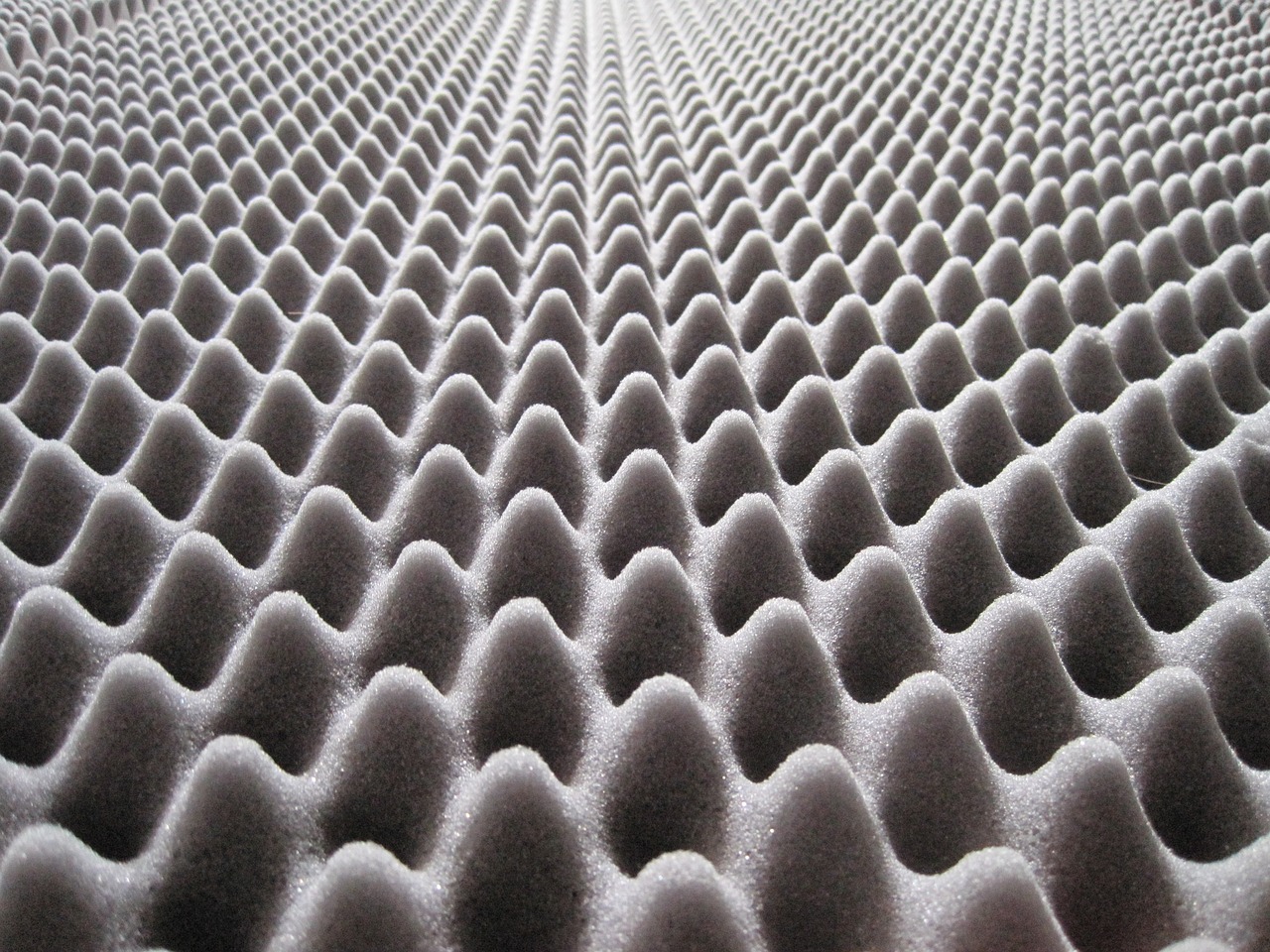
Soundproofing on a budget usually starts with acoustic foam, but foam does a different job from soundproofing. Acoustic foam absorbs mid and high-frequency reflections inside a room, which cuts reverb and flutter echo. It does not stop sound travelling through walls, floors or ceilings.
Knowing that difference stops money going on the wrong product. iFoam supplies acoustic foam from its Cape Town and Durban branches. This guide covers how the foam works, which profile to use, where to place it and how to plan coverage for a home studio.
Soundproofing vs Sound Absorption: Why the Difference Matters
The two terms get mixed up all the time, and the mix-up costs money. They describe different physical processes, and each needs different materials.
Soundproofing, also called sound isolation, reduces how much sound passes through a wall, floor, ceiling or window. It relies on mass, decoupling and airtight construction. Typical methods are double-leaf walls, resilient channels, acoustic sealant and solid-core doors. These are building changes.
Sound absorption reduces the sound bouncing around inside a room. Hard surfaces reflect sound, which creates reverb and flutter echo. Acoustic foam turns part of that reflected energy into a tiny amount of heat as it passes through the open cells. The room sounds drier and more controlled.
Many people want foam to soundproof a room cheaply. Foam treats the sound inside the room and makes recordings cleaner. If neighbours or noise leaking out is the concern, foam on the walls will not isolate the room on its own.
For a fuller explanation, read the guide to soundproofing vs sound absorption. iFoam’s range of soundproofing and acoustic foam covers the main acoustic foam types.
Myth: Cardboard egg trays, polystyrene ceiling tiles and thin decorative foam give a room useful acoustic treatment.
Reality: Egg trays and polystyrene tiles scatter a little high-frequency sound but absorb very little in the mid-range, where voices and instruments sit. Convoluted acoustic foam looks similar to an egg tray, but it is open-cell foam made to absorb sound.
How Acoustic Foam Works
Sound travels through air as a pressure wave. When it hits a hard surface such as plaster, concrete or glass, most of the energy reflects back into the room. Repeated reflections build reverb and blur the detail in a recording.
Acoustic foam absorbs sound through friction. As the wave enters the open-cell structure, air is forced through the narrow passages between cells. That friction turns some of the wave’s energy into heat, so less sound reflects back.
Absorption is measured as an absorption coefficient, on a scale of 0 to 1. A value of 0 means everything reflects, and a value of 1 means everything is absorbed. Figures are quoted at set frequency bands so products can be compared fairly.
Open-Cell Structure and Frequency Response
Acoustic foam works because its cells are open and connected, so air and sound can move into the material. Closed-cell foam, used for flooring, insulation and packaging, is sealed and reflects more sound than it absorbs.
Absorption is not even across all frequencies. Thin foam handles high and upper-mid frequencies well but does little for bass. Thicker foam reaches lower into the mid-range. The lowest frequencies need very deep foam in the corners, where bass builds up.
Key principle: thickness controls how low the foam reaches. Where the budget is tight, put the thickest foam at the most important positions and use thinner foam elsewhere.
Which Acoustic Foam Profile Suits a Home Studio?
iFoam supplies three main profiles for studio use. Each has a slightly different job.
| Profile | What it does | Where to use it |
|---|---|---|
| Pyramid panels (Procell Pyramid) | Absorbs sound and breaks up reflections between parallel walls | Side walls and the ceiling above the mix position |
| Wedge panels (Procell Wedge) | Absorbs across the mid and high frequencies with a ridged face | Behind the mix position and on the front wall |
| Convoluted foam (egg box foam) | Flame-retardant foam that absorbs background noise | Vocal booths, voice-over corners and call centres |
For a budget home studio, start with pyramid or wedge panels at the first reflection points and behind the listening position. Add deep foam in the corners once those are covered. The guide to egg crate vs pyramid foam compares two of the profiles in more detail.
How Much Foam Does a Home Studio Need?
Placement matters more than total area. A few panels in the right positions do more than a wall full of foam placed at random. Start with the positions that affect what you hear most, then add coverage if the room still rings.
The main treatment positions, in order of impact:
- Behind the mix position: Treating the wall behind your chair cuts reflections that blur the stereo image.
- Side wall first reflection points: These are the spots where sound from each speaker first bounces towards you, and treating them sharpens the stereo picture.
- Ceiling above the listening position: A panel here reduces reflections coming down from above.
- Front wall behind the monitors: Foam here stops energy from the back of the speakers bouncing straight back at you.
- Room corners: Deep foam in the vertical corners helps control bass build-up.
How to Work Out Coverage
To plan how much foam to order, work out the wall area and decide how much of it to treat.
- Measure each wall: Note the length and height of every wall in metres.
- Work out the area: Multiply length by height for each wall and add the four walls together.
- Choose your target: Decide how much of that area to treat, starting with the priority positions above.
- Divide by panel size: Divide the target area by the area of one panel to get the number of panels.
For example, a 4 m by 3 m room with a 2.4 m ceiling has about 33.6 m² of wall. If you plan to treat 8 m² and each panel covers 0.36 m², you need 23 panels.
Bass Traps: Controlling Low Frequencies on a Budget
Bass is the hardest and most expensive part of treating a small room. Room modes are standing waves set up by the room’s dimensions. They make some bass notes boom and others almost vanish at the listening position, which leads to poor mixing decisions.
Bass builds up most at room boundaries, especially in corners where two walls meet. That makes corners the most cost-effective place to treat low frequencies.
Foam needs real depth to work on bass. Thin panels do little below the mid-range, so corner treatment uses thick blocks or wedges cut to fit. iFoam cuts acoustic foam to custom shapes and sizes, so corner pieces can be made to suit the room.
- Start with the front corners: Treat the two corners at the speaker end of the room first.
- Go floor to ceiling where you can: Taller corner pieces cover more of the bass build-up.
- Add deep panels on the rear wall: Thicker foam behind the listening position helps with the bass that reaches it.
Ask iFoam which depth suits your room before ordering, because the right thickness depends on the room size and the foam grade.
DIY Panels vs Ready-Made Foam Tiles
DIY panels use foam cut to size, a timber frame and a fabric cover. They need tools, timber, fabric and a staple gun as well as the foam.
Ready-made acoustic tiles arrive profiled and ready to mount. They take far less time to install.
| Factor | DIY fabric panel | Ready-made foam tile |
|---|---|---|
| Material cost | Lower for the foam, plus frame and fabric | Higher per square metre |
| Build time | Significant, as each panel is built by hand | Minimal, as tiles go straight on the wall |
| Finish | Fabric-covered, neat look | Visible foam profile |
| Sizes | Any size or shape | Set tile sizes and profiles |
| Performance at the same thickness | Similar with the same foam grade | Depends on the profile |
Fabric panels suit rooms where looks matter, such as a home office seen on video calls. Ready-made tiles suit rooms where function comes first. iFoam supplies foam cut to size for DIY panels as well as profiled acoustic tiles.
Step by Step: Installing Acoustic Foam Panels
Acoustic foam is light and easy to put up. The main choice is the mounting method, which affects how easily the panels come off later.
Tools: Tape measure, pencil, spirit level, a small mirror, and your chosen adhesive, tape or clips.
Step 1: Find the first reflection points. Sit in your listening position. Ask a helper to move a small mirror along the side wall. The point where you see a speaker in the mirror is a first reflection point. Mark it, then repeat on the other wall and the ceiling.
Step 2: Plan the layout. Mark panel positions in pencil with a spirit level before fixing anything. Work outwards from the centre of each wall so the layout stays even.
Step 3: Choose the mounting method.
| Method | Best for | Can it come off? |
|---|---|---|
| Contact adhesive | Permanent installs | No, it will mark the wall |
| Double-sided tape | Light panels | Partly |
| Impaling clips or pins | Any panel | Yes, with no adhesive |
| Removable adhesive strips | Light panels | Yes, though some residue is possible |
In rented homes, clips or removable strips avoid permanent damage. Check the weight rating of any tape or strip before use.
Step 4: Fix the panels. Follow the adhesive maker’s instructions, including the waiting time before pressing the panel on. Hold each panel firmly in place, then check it is level.
Step 5: Test the room. Clap sharply at the listening position and listen for a fast metallic ring. If you still hear it, add panels on the remaining parallel walls.
Planning a Budget Home Studio Treatment
Costs depend on room size, foam thickness and how much bass treatment you add. Prices change, so base your budget on a current quote for your room measurements.
| Level | What it covers |
|---|---|
| Starter | Panels at the first reflection points and behind the mix position |
| Standard | Starter coverage plus panels on the front wall and deep foam in two corners |
| Full | Wider wall coverage, all four corners treated and a ceiling panel |
The most common mistake is buying only flat wall tiles and nothing for the corners. In small, hard rooms, corner treatment often gives the biggest audible improvement for the money.
Key Terms Explained
Absorption coefficient: A figure on a 0 to 1 scale showing how much sound a material absorbs at a given frequency. It is quoted per frequency band so products can be compared.
Room mode: A standing wave caused by sound bouncing between parallel surfaces. Room modes create boomy and weak spots in the bass at different places in the room.
Flutter echo: A fast, ringing repeat of a sharp sound, caused by reflections between two parallel hard surfaces. It is easy to hear after a hand clap.
Reverb: The way sound lingers in a room after the source stops. Too much reverb blurs speech and recordings.
First reflection point: The spot on a wall or ceiling where sound from a speaker first bounces towards the listener. It is a priority position for treatment.
Diffusion: Scattering sound in many directions instead of absorbing it. Small home studios rely mainly on absorption.
Open-cell foam: Foam with connected cells that let air and sound in, which makes it the right material for absorption. The open-cell vs closed-cell foam guide explains the difference.
NRC (noise reduction coefficient): A single average of absorption at four frequency bands. It is handy for quick comparisons but hides how a product performs on bass.
Resources
- iFoam, sound proofing and acoustic products.
- iFoam, acoustic foam Cape Town.
- iFoam, acoustic foam Durban.
- iFoam, acoustic foam panels: types and placement.
- iFoam, soundproofing vs sound absorption.
- F. Alton Everest and Ken C. Pohlmann, Master Handbook of Acoustics.
Frequently Asked Questions
Does acoustic foam work for home studios?
Yes. Acoustic foam reduces mid and high-frequency reflections, which shortens reverb and stops flutter echo. Recordings sound cleaner and mixes are easier to judge. It works inside the room only and does not stop sound reaching neighbouring rooms.
Can I soundproof a room on a budget?
True sound isolation is hard to do cheaply because it needs mass, airtight seals and separated structures. Door seals and heavy curtains help a little. For clean recordings, treating the sound inside the room is the affordable fix and usually the one that matters most.
Why is acoustic foam not a soundproofing material?
Stopping sound passing through a wall needs mass and airtight construction. Acoustic foam is light and open-celled, so sound passes through it easily. It absorbs reflections inside a room but adds almost nothing to isolation.
How much acoustic foam does a home studio need?
Start with placement rather than a fixed amount. Treat the first reflection points on the side walls and ceiling, the wall behind you and the wall behind the speakers. Add corner pieces next, then extra panels if the room still rings.
What thickness of foam do I need for bass?
Thin foam has little effect on bass. Low frequencies need deep foam, usually thick blocks or wedges fitted into the room corners. The right depth depends on the room size and the foam grade.
Is acoustic foam the same as soundproofing foam?
Not quite. Acoustic foam absorbs sound inside a room. Foam used for noise control in generator rooms and engine bays is usually denser and works as part of a sealed enclosure. In a normal room, foam on the walls will not stop sound reaching the neighbours.
How do I put up acoustic foam without damaging walls?
Use impaling clips or removable adhesive strips. Both let you take panels down later without leaving adhesive on the foam. Contact adhesive gives the strongest bond but cannot be removed cleanly.
What causes flutter echo in a home studio?
Flutter echo comes from sound bouncing quickly between two parallel hard surfaces, such as opposite walls. You hear it as a metallic ring after a clap or drum hit. Foam on one or both surfaces breaks up the reflections.
How do I find the first reflection points?
Sit where you normally listen while a helper slides a mirror along the side wall. Mark the wall wherever you can see a speaker in the mirror. Do the same on the other side wall and the ceiling.
Can I use household foam for acoustic treatment?
Upholstery and mattress foam absorb some high frequencies, but they are not made for acoustic use. Results are patchy across the frequency range. Purpose-made acoustic foam gives more predictable results.
Does the shape of acoustic foam matter?
Shape matters less than thickness. Pyramid and wedge profiles scatter some sound as well as absorbing it, which stops a room sounding completely dead. Flat foam absorbs evenly but gives a drier sound.
Is iFoam’s acoustic foam fire-retardant?
iFoam’s acoustic range includes flame-retardant convoluted foam and fire-resistant Procell foam. Fire performance matters most in studios, offices and public spaces, so state where the foam will be used when choosing a grade.
Final Thoughts
Soundproofing on a budget works best when you treat the problem you actually have. Acoustic foam reduces reverb and flutter echo inside a room, but it does not isolate the room from its neighbours.
Spend on placement first: panels at the first reflection points, behind the listening position and in the corners. That gives a bigger improvement than covering every wall. Contact iFoam in Cape Town or Durban for acoustic foam and cut-to-size corner pieces for your home studio.