
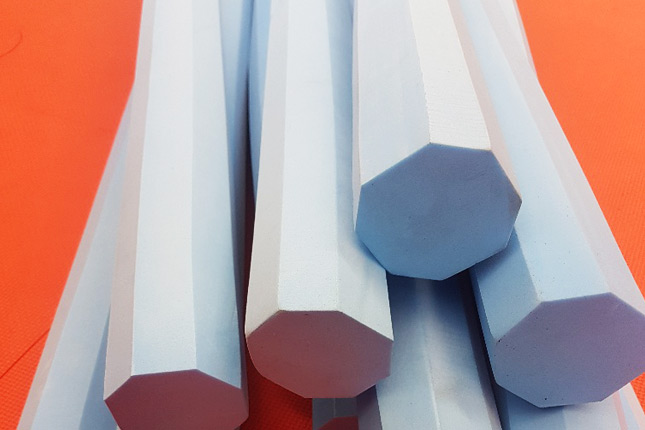
Most pool noodles are made of extruded polyethylene (PE) foam, a soft and flexible closed cell foam. That is the short answer to what pool noodles are made of. Every cell in the foam is sealed and filled with gas, so a noodle weighs a fraction of the water it pushes aside.
iFoam converts closed cell PE and EVA foam at its Cape Town and Durban branches. Our PE33 grade weighs 33 kg per cubic metre, against about 1 000 kg for the same volume of fresh water.
Most Pool Noodles Are Made of Closed Cell Polyethylene Foam
To make polyethylene foam, the plastic is melted, mixed with gas under pressure and pushed through a round die. As it leaves the die, the gas expands into sealed bubbles and the foam sets as a continuous log that is cut to length.
Why Polyethylene Foam Floats
Anything floats when it weighs less than the water it displaces, and a pool noodle is mostly gas by volume. In closed cell foam that gas stays trapped, so the noodle keeps its lift for as long as it is in the water.
A noodle can carry many times its own weight, which is why a swimmer can lean on one. It is still a toy and a training aid, never a substitute for a life jacket.
Key principle: PE33 foam weighs about a thirtieth of the same volume of fresh water. The gas in its sealed cells does nearly all the work of keeping a noodle afloat.
Polyethylene Foam and Polystyrene Are Different Materials
Myth: Pool noodles are made of the white bead foam people call styrofoam.
Reality: That bead foam is expanded polystyrene (EPS), a rigid material that cracks and crumbles when it is bent. A pool noodle bends and springs back because polyethylene foam is flexible.
| Property | Polyethylene (PE) foam | Polystyrene (EPS) foam |
|---|---|---|
| Feel | Soft and flexible | Rigid |
| When bent | Bends and recovers | Cracks and crumbles |
| Structure | One continuous closed cell foam | Fused beads |
| When damaged | Does not shed beads | Sheds beads |
EVA is the other common closed cell foam, with a slightly more rubbery feel than polyethylene. Our guide to PE and EVA foam compares the two at different densities.
Why Pool Noodles Keep Water Out
A kitchen sponge left in the pool comes out heavy and dripping. A pool noodle left in all day comes out barely heavier.
A sponge is open cell foam, so its cells connect and water runs straight through. In closed cell foam each cell is sealed, so water stops at the surface. Our article on open cell and closed cell foam covers the difference in more detail.
For anyone asking if pool noodles are waterproof, the practical answer is yes. Water absorption in closed cell polyethylene is very low, which is why a noodle still floats after a full day in the pool.
How Sun, Chlorine and Salt Water Affect Pool Noodles
Water does not wear a pool noodle out. Sunlight does: UV exposure slowly makes polyethylene foam brittle and can fade the colour. A noodle left on the deck through a South African summer spends far more hours in the sun than in the water.
The warning signs are faded colour, a crumbling surface and fine cracks when the noodle is bent. Chlorine is a minor factor, and salt does not attack polyethylene at all. It simply dries as a crust on the surface.
A short care routine covers all three:
- Rinse: Rinse the noodle in fresh water after a chlorinated pool, a salt pool or the sea.
- Dry: Stand it on end so water drains out of the hollow core.
- Store: Keep it in the shade between uses so it lasts longer.
- Retire: Replace any noodle that cracks or crumbles when you bend it.
Pool Noodle Sizes and Densities
Pool noodle sizes come down to two numbers, diameter and length, plus one choice about the core.
- Diameter: A thicker noodle pushes aside more water, so it carries more weight.
- Length: Longer noodles wrap under the arms or bend into a loop, and shorter lengths suit padding and craft work.
- Core: A hollow core floats slightly less than a solid one, but it slips over a bar, rail or pipe.
Density is the third number. The same polyethylene can be soft or firm depending on how much plastic sits in each cubic metre. On the Shore C hardness scale, PE33 sits around 17 and the firmer PE45 around 26. PE45 is the grade we list for pool kick boards and toys, and the foam density chart explains how these figures relate.
Key principle: Our closed cell PE and EVA sheet runs 30 to 120 kg/m³, and within each foam type a higher density means a firmer foam.
Pool Noodle Uses Beyond the Pool
The properties that make a noodle float also make it useful on dry land. It is light, soft, easy to cut and does not soak up water.
A length of noodle fixed to a garage wall at door height stops a car door chipping its paint, and the same idea works on trailer edges and shelving corners. Slit along its length, a hollow noodle also slips over an exposed pipe to guard it against knocks. For thermal insulation, use a foam grade specified for that job.
Short lengths fill voids in boxes during transit, although heavy or high value items are held more securely by packaging inserts cut to the product’s shape. Our guide to pool noodles in bulk covers fitness, craft and safety uses in more detail.
Ordering Pool Noodles in Bulk in South Africa
Industrial Foam and Rubber has supplied foam since 1997, with branches in Cape Town and Durban and delivery anywhere in South Africa. For the quickest bulk quote, include these details:
- Use: Say what the noodles are for, such as the pool, padding, packaging or craft work.
- Quantity: Give the number of noodles or the total length you need.
- Size: Note the diameter, the length and the core type, solid or hollow.
- Colour: Choose a single colour or a mix.
- Delivery: Name the town or site the order is going to.
Resources
- iFoam, pool noodles in Cape Town.
- iFoam, pool noodles in Durban.
- iFoam, pool noodles in bulk: uses beyond the pool.
- iFoam, open cell vs closed cell foam.
- iFoam, foam density chart.
Frequently Asked Questions
Are pool noodles made of polystyrene?
Usually not. Polystyrene is a rigid bead foam that crumbles when bent, while most pool noodles are extruded polyethylene. The two get confused because both are light and often brightly coloured, but polyethylene flexes without breaking and never sheds beads.
Do pool noodles absorb water?
Very little. The foam’s cells are sealed off from each other, so water sits on the outside rather than soaking in. That is why a noodle keeps floating all day and dries quickly once it comes out of the pool.
How long do pool noodles last in the sun?
UV light ages a pool noodle faster than water does, gradually making the foam brittle and possibly fading its colour. Keeping noodles in the shade when they are not in use is the simplest way to slow that down.
What else can pool noodles be used for?
Bulk buyers use them as wall and trailer padding and as sleeves on sharp corners and exposed pipes. They also go into packaging as void fill, into school and craft projects, and into swimming lessons as floats. Each use starts with the same foam cut to the length the job needs.
Final Thoughts
Most pool noodles are made of closed cell polyethylene foam. That one material explains why they float, why they flex and why they suit so many jobs out of the water. Knowing what pool noodles are made of also tells you how to look after them: rinse them, dry them and keep them out of the sun. To order in bulk, send us the use, quantity and sizes through our pool noodles for sale page.