
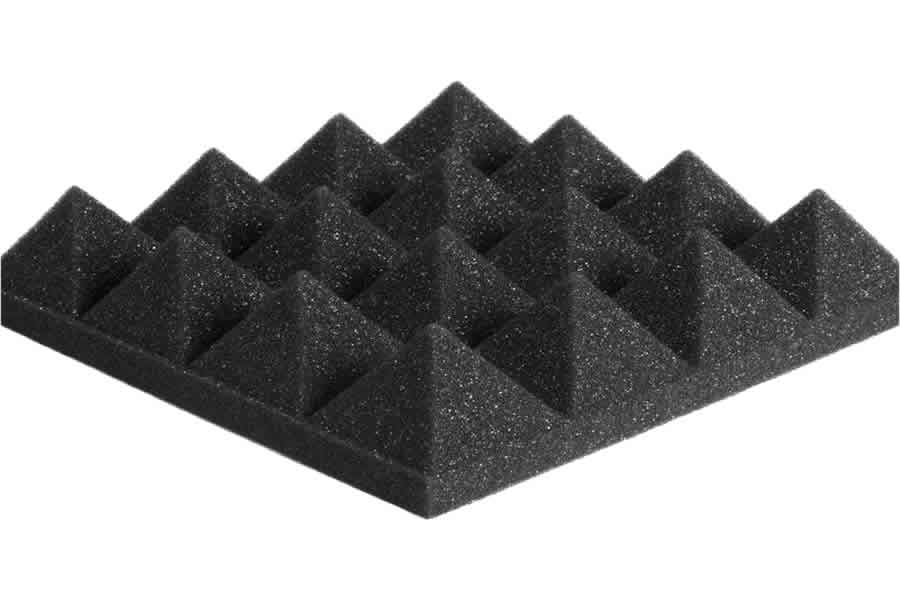
Sound absorbing panels reduce echo and reverberation by soaking up sound that would otherwise bounce off hard surfaces. In open-plan offices and restaurants, that makes speech easier to follow and keeps the overall noise level down.
iFoam supplies acoustic foam for commercial spaces from its Cape Town and Durban branches. The range includes pyramid and wedge panels, convoluted foam and fire-resistant Procell foam, cut to custom sizes and shapes. This guide covers why commercial rooms get so loud, how panels are rated, which types suit offices and restaurants, and where to put them.
Why Commercial Spaces Get So Loud
Most commercial interiors are built from hard materials: concrete floors, glass partitions, plastered walls, tiled splashbacks and exposed ceilings. These surfaces reflect almost all the sound that hits them, so every conversation, chair scrape and coffee machine keeps bouncing around the room.
High ceilings and large open floors make it worse, because sound has more space to travel and reflect before it fades. In an open-plan office, overlapping calls and conversations raise the background noise and make it harder to concentrate.
Restaurants have their own version of the problem. As the room fills, diners raise their voices to be heard, which raises the noise for everyone else, and the cycle repeats. In a hard dining room it builds quickly.
Sound Absorption vs Sound Blocking
Sound absorption deals with echo inside a room. Panels take in some of the sound that reaches them and turn it into a tiny amount of heat, so the room sounds calmer and clearer.
Sound blocking stops sound passing between rooms. It needs mass, separated wall layers and airtight seals, and absorbing panels add very little to it.
Most noise complaints in offices and restaurants are about echo inside the space, so absorption is usually the right fix. Noise coming in from the street or a neighbouring unit is a building problem. The guide to soundproofing vs sound absorption explains the difference in more detail.
Myth: Acoustic panels will stop noise reaching the office next door.
Reality: Panels cut echo inside the room. Sound still passes through the walls at much the same level unless the walls themselves are improved.
How Sound Absorbing Panels Are Rated
The noise reduction coefficient (NRC) is a single figure on a 0 to 1 scale. A higher NRC means the panel absorbs more of the sound that reaches it. It is an average of absorption across four mid-range frequency bands.
NRC is a useful shortcut, but it hides how a panel handles low frequencies. Where bass matters, such as near plant rooms or venues with loud music, ask for the full frequency data on the product sheet.
Reverberation time, often written as RT60, measures how long sound takes to die away in a room. Treating a room shortens its reverberation time, which people notice as a calmer, clearer space.
Key principle: check the NRC and the thickness together. Thicker panels reach lower frequencies, so a thin panel with a good NRC may still miss the boomy part of the problem.
Types of Sound Absorbing Panels
Acoustic Foam Panels
Open-cell acoustic foam is light, easy to cut and quick to fit. Thickness decides how low the absorption reaches: thin foam handles higher frequencies, while thicker foam works further down into the speech range.
iFoam supplies Procell pyramid and wedge panels, convoluted (egg box) foam and fire-resistant Procell foam for engine and generator rooms. Panels can be cut to custom shapes and sizes, and the guide to acoustic foam panels compares the profiles.
Exposed foam suits call centres, back-of-house areas, studios, plant rooms and industrial spaces. In customer-facing areas, it is often painted with care or covered with fabric.
Fabric-Wrapped Panels
Fabric-wrapped panels have an absorbent core behind an acoustically open fabric. The fabric gives a finished look that suits boardrooms, receptions and dining rooms. They are usually built by acoustic fit-out specialists.
Ceiling Baffles and Clouds
Baffles hang vertically from the ceiling, and clouds are flat panels suspended below it. Both treat the ceiling, which is often the largest hard surface in the room, and they work especially well where ceilings are high.
| Panel type | Best for | Watch out for |
|---|---|---|
| Acoustic foam panels | Call centres, studios, back-of-house and plant rooms | Exposed foam may not suit customer-facing areas |
| Fabric-wrapped panels | Boardrooms, receptions and restaurants | Higher cost, and the fabric must be acoustically open |
| Ceiling baffles and clouds | Large rooms with high ceilings | Need secure fixing and a suitable fire rating |
Treating Open-Plan Offices
The main problem in open-plan offices is speech that carries. People hear enough of nearby conversations to be distracted, which makes focused work harder.
- Ceiling first: The ceiling is usually the largest hard surface and can be treated without changing the desk layout.
- Walls at ear height: Panels on walls next to desks and meeting areas cut sideways reflections.
- Shared partitions: Treat walls between teams where noise carries most.
- Meeting rooms: Small rooms with glass walls often need panels on at least one wall.
Spread panels across the room rather than grouping them in one corner. Even coverage reduces echo more than the same area of panels concentrated in one place.
Treating Restaurants and Hospitality Venues
Restaurants often choose hard finishes on purpose. Polished concrete, exposed brick, tiles and glass are durable and easy to clean, so acoustic treatment has to work with that look rather than against it.
- Ceiling over the dining floor: Baffles or clouds treat the largest surface and help the whole room.
- Walls at seated height: Fabric-faced panels on rear and side walls cut reflections where diners sit.
- Bar and pass areas: Add panels near the bar and kitchen pass, where much of the noise starts.
- Soft seating: Upholstered banquettes and booths add some absorption of their own.
A good test is simple: two people at a table should be able to talk at a normal volume without leaning in. For Cape Town fit-outs, iFoam supplies acoustic foam in Cape Town and sound absorbing foam, while Durban projects are served by the Durban branch.
Installation and Fire Safety
Placement matters as much as the panel. A panel at a busy reflection point does more than a better-rated panel in a quiet corner.
Light foam panels are usually glued to plaster or masonry. Heavier fabric panels, baffles and clouds need mechanical fixings or rated suspension cables.
Interior linings in commercial buildings must meet fire requirements. Ask for the fire classification of any panel before buying, and check it against the project specification and local building regulations. iFoam’s acoustic range includes flame-retardant and fire-resistant options.
What to Send When Asking for a Quote
- Room size: Length, width and ceiling height in metres.
- Surfaces: Which floors, walls and ceilings are hard, and what is already soft.
- Use of the space: Office, meeting room, dining room, bar or plant room.
- Finish: Exposed foam, painted foam or a fabric finish.
- Fixing method: Glued, screwed or suspended.
- Fire requirements: Any fire classification set by the architect or building regulations.
Key Terms Explained
NRC (noise reduction coefficient): A figure on a 0 to 1 scale showing how much sound a material absorbs on average across four mid-range frequency bands.
Reverberation time (RT60): The time it takes for sound in a room to fade by 60 decibels after the source stops. Shorter times mean a clearer room.
Reverberation: Sound that lingers in a room after the source stops, caused by many reflections off hard surfaces.
First reflection point: The surface where sound first bounces after leaving its source. Treating these points gives the biggest improvement for the area used.
Absorption coefficient: How much sound a material absorbs at one particular frequency.
Speech intelligibility: How easily speech can be understood in a room. Too much echo makes conversations harder to follow.
Resources
- iFoam, sound proofing and acoustic products.
- iFoam, acoustic foam Cape Town.
- iFoam, acoustic foam Durban.
- iFoam, soundproofing vs sound absorption.
- iFoam, soundproofing on a budget.
- ASTM International, ASTM C423, sound absorption test method.
- ISO 3382, measurement of room acoustic parameters.
Frequently Asked Questions
What is the difference between sound absorbing panels and soundproof panels?
Sound absorbing panels cut echo inside a room. Soundproofing stops sound passing between rooms and needs mass and airtight construction. A room full of absorbing panels sounds calmer, but noise still passes through its walls.
What NRC should office panels have?
A higher NRC is better, but thickness and placement matter just as much. Put panels on the ceiling and the walls nearest the desks, and ask for full frequency data if low-frequency noise is a concern.
Can acoustic foam be used in a restaurant?
Yes. Exposed foam suits kitchens, back-of-house areas and plant rooms. In dining areas, foam is usually covered with fabric or used in ceiling treatments so it fits the look of the room.
How many acoustic panels do I need?
It depends on the room size, the hard surfaces and how the room is used. Start with the ceiling and the walls nearest the noise, then add panels until speech is clear.
Do acoustic panels need to be fire rated?
Yes, in commercial buildings, because wall and ceiling linings have to meet fire rules. Ask for the fire classification of any panel and check it against the project specification before buying.
Where can I buy sound absorbing panels in South Africa?
iFoam supplies acoustic foam panels from its branches in Cape Town and Durban. The range includes pyramid and wedge panels, convoluted foam and fire-resistant Procell foam, cut to size.
What is RT60?
RT60 is the time it takes for sound in a room to fade by 60 decibels after the source stops. Shorter times mean a clearer, less echoey room.
How do I reduce echo in a restaurant?
Treat the ceiling over the dining floor first, then add panels on rear and side walls at seated height. Upholstered booths and banquettes help too.
What is the difference between wedge, pyramid and convoluted foam?
Wedge foam has parallel ridges, pyramid foam has a grid of points and convoluted foam has an egg box pattern. All three absorb sound, and thickness affects performance more than the profile does.
Can acoustic foam be painted?
It can, with care. Light coats of water-based spray paint keep the open cells clear, while heavy coats fill them and reduce absorption.
Why does an office get louder as it fills up?
As more people talk, everyone raises their voice to be heard, which lifts the noise further. Absorbing panels shorten the echo after each sound and break that cycle.
Final Thoughts
Sound absorbing panels fix the echo that makes offices and restaurants tiring places to be. Choose the panel type to suit the space, treat the ceiling and the walls nearest the noise, and check the fire rating before installation.
Contact iFoam in Cape Town or Durban with your room sizes for acoustic foam and sound absorbing panels cut to fit.