
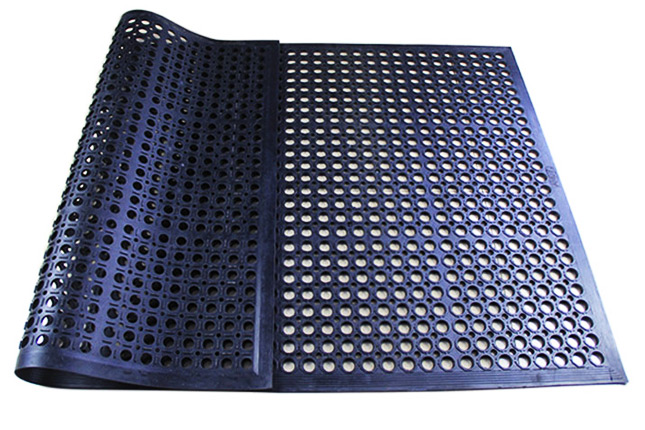
The three main anti-slip flooring options for South African industrial sites are rubber matting, interlocking PVC tiles and anti-fatigue matting. Rubber matting suits heavy workshops and wet areas, with anti-slip ratings of R10 to R13. Interlocking PVC tiles work well in warehouses and light to medium industry. Anti-fatigue matting reduces operator fatigue at standing workstations.
iFoam has supplied foam and rubber to South African industry since 1997, from its Cape Town and Durban branches. This guide explains how to match each flooring type to the conditions on your floor.
Why Industrial Flooring Choice Matters
Choosing flooring for an industrial site is a safety, compliance and operational decision. The wrong surface leads to slips and falls, regulatory exposure and avoidable downtime.
Slips, trips and falls are among the most common causes of workplace injury. Under South Africa’s Occupational Health and Safety Act (Act 85 of 1993), employers have a legal duty to identify and reduce workplace hazards, including unsafe floor surfaces. Falling short can lead to enforcement action, compensation claims and damage to reputation.
The right flooring does three things at once: it reduces injury risk, helps meet OHS obligations and lowers long-term maintenance cost. A surface that fails in service costs more to replace than one chosen correctly at the start.
Key principle: floor choice is not an aesthetic decision. It is a safety and compliance obligation with measurable consequences.
iFoam’s industrial flooring range covers industrial rubber matting, interlocking PVC tiles, coin rubber flooring and anti-fatigue mats for the conditions described below.
The Main Types of Industrial Flooring Explained
Four flooring types cover most industrial applications. Each suits a different set of conditions, loads and hazards. Choosing well starts with knowing what each material does and where it performs reliably.
Rubber Matting
Rubber matting is made from vulcanised or recycled rubber compounds. Vulcanising chemically bonds the rubber, which increases tensile strength, resistance to deformation under load and resilience against oils and solvents. That makes it the default choice for vehicle workshops, light manufacturing and any area where chemical splash is routine.
Rubber matting carries anti-slip ratings of R10 to R13, depending on the compound and surface pattern. Heavy-duty matting comes in rolls for large continuous areas or as interlocking tiles for modular layouts. iFoam’s Rampmat is 12 mm thick for general industrial and commercial floors, and its Linkmat is 16 mm for heavier use.
As a guide, R10 is a sensible minimum for general workshops, with R11 where oils or cutting fluids regularly reach the floor.
Rubber matting copes with rolling equipment and moderate vehicle traffic. Its compression set (the permanent deformation left after sustained load) is lower than foam, which is why it keeps its profile under heavy use.
Interlocking PVC Tiles
Interlocking PVC tiles are made from rigid or semi-rigid thermoplastic. They join with a snap-fit edge that needs no adhesive for standard installations, which suits sites that change layout or need regular deep cleaning under the floor.
Surface textures include smooth, coin and diamond-plate patterns, each giving different grip. Anti-slip ratings for PVC tiles usually fall between R9 and R11, depending on texture and formulation. Chemical resistance varies by compound: standard PVC resists diluted acids and alkalis well, but always check it against the specific chemicals on site.
Damaged tiles can be replaced individually, which keeps lifetime maintenance costs down compared with continuous rolls. iFoam’s PVC interlocking floor tiles are 4 mm thick and suit light to medium industry, commercial workshops and warehouses where modularity and appearance both matter. The same interlocking principle carries over into sports and gym flooring.
Anti-Fatigue Matting
Anti-fatigue matting reduces strain on workers who stand at fixed workstations for long periods. The mat gives slightly under body weight, which prompts small movements in the legs and lower back and eases the circulation and muscle fatigue that come with standing still.
Anti-fatigue mats are made from foam or softer rubber. For foam versions, the difference between open-cell and closed-cell foam is critical: open-cell foam absorbs liquids and is unsuitable for wet areas, while closed-cell foam resists moisture and is easier to clean. Density also affects how long a foam mat keeps its comfort; the foam density chart explains how to match density to traffic.
Foam anti-fatigue mats are not suited to vehicle traffic, forklift paths or areas with oils and solvents. They belong at assembly lines, packing stations and service counters. Where conditions are harsher, a rubber anti-fatigue mat is the better choice.
Drainage Mats
Drainage mats have an open-grid or perforated surface that lets liquids pass through and drain away from where people stand. They are the right choice wherever liquid pools routinely: food processing areas, car wash bays, wet production lines and commercial kitchens.
Drainage mats are made from rubber, PVC or stainless steel, depending on hygiene and load needs. Food processing areas need food-safe materials that do not leach compounds and can handle hot cleaning cycles.
Matching Flooring to Your Environment
The table below sums up the core decision for the most common South African industrial settings.
| Environment | Recommended Type | Key Property Required | Secondary Consideration |
|---|---|---|---|
| Workshop or manufacturing | Heavy-duty rubber matting | Oil and chemical resistance; anti-slip R10 to R11 (DIN 51130) | Minimum 6 mm thickness for vehicle bays |
| Wet areas or food processing | Drainage mats or food-safe rubber | Drainage, hygiene, anti-slip R11 to R12 | Removable for cleaning underneath |
| Warehouse or heavy industry | Heavy-duty interlocking PVC tiles or rubber | Load capacity; ESD classification where needed (IEC 61340) | Forklift-safe seam design |
| Office or light industry | Anti-fatigue matting or lighter PVC tiles | Comfort and appearance | Ease of cleaning and modularity |
Workshop and Manufacturing
Oil, solvent and chemical splash are the main hazards in workshops and manufacturing. R10 is the minimum anti-slip rating; R11 is recommended for vehicle bays where oil on the floor is a regular condition.
Heavy-duty rubber matting with an oil-resistant compound is the default choice here. Use at least 6 mm thickness wherever there is rolling equipment; thinner materials deform and create trip hazards at seams and edges.
Wet Areas and Food Processing
Drainage is a must in food processing areas, car wash bays and wet production lines. Open-grid drainage mats stop liquid pooling, which is both a hygiene and a slip hazard. Anti-slip ratings here should reach R11 to R12, given the constant presence of water and food residue.
Food-safe rubber or PVC prevents contamination of food products. Drainage mats must be removable so the floor underneath can be cleaned, which is a routine food hygiene audit requirement.
Warehouses and Heavy Industry
Warehouses with heavy pallet loads and forklift traffic need flooring rated for both static and moving loads. Heavy-duty interlocking PVC tiles and rubber matting both qualify, provided the load rating is confirmed with the supplier before installation.
Electrostatic dissipative (ESD) flooring is needed in electronics manufacturing and pharmaceutical warehouses, where static discharge could damage products or set off flammable vapours. The relevant international standard is IEC 61340-5-1. In interlocking tiles, a forklift-safe seam design stops tiles separating under the sideways force of turning vehicles.
Office and Light Industry
Anti-fatigue matting reduces strain at standing workstations, including assembly lines, packing counters and laboratory benches. Interlocking PVC tiles in standard grades look neater and are easier to clean than foam in open-plan spaces. A side benefit of matting in nearby office areas is quieter footfall.
PVC Tiles vs Rubber Matting: Head-to-Head Comparison
| Criterion | Interlocking PVC Tiles | Rubber Matting | Anti-Fatigue Matting |
|---|---|---|---|
| Installation | Snap-fit, no adhesive needed | Rolls or tiles; adhesive for permanent installation | Loose-lay; lightest option |
| Durability | High in heavy-duty grades | Very high; resists UV, oils and heavy loads | Moderate; depends on material and density |
| Chemical resistance | Good (depends on formulation) | Excellent (vulcanised rubber) | Low for open-cell foam; moderate for closed-cell; good for rubber |
| Anti-slip rating | R9 to R11, depending on texture | R10 to R13, depending on compound | Varies; foam versions for dry areas only |
| Load capacity | Medium to high (confirm with supplier) | High | Low to medium |
| Relative cost | Medium | Medium to high | Low to medium |
| Maintenance | Easy: replace individual tiles | Moderate: clean rolls or tiles | Low: lift and clean |
| Best for | Light to medium industry, commercial, gyms | Heavy industry, workshops, wet areas | Standing workstations, offices, light assembly |
Myth: A textured surface is enough to make a floor non-slip.
Reality: A floor’s anti-slip rating depends on its compound and surface geometry, measured under standard test conditions, not on its colour, branding or visible pattern. Always ask the supplier for the DIN 51130 R-rating before choosing any industrial floor.
Key Specifications to State When Ordering
Most industrial flooring mistakes come from an incomplete order. This checklist covers the minimum information to give a supplier.
- Anti-slip rating (DIN 51130 R-rating): The scale runs from R9 (dry indoor floors) through R10 (occasional wetness), R11 (wet or oily conditions) and R12 (wet, heavy oil) to R13 (steep ramps with wet oil). State the R-value the environment needs, and do not accept “anti-slip” without a confirmed rating.
- Load rating: Confirm static and moving load capacity for any area with forklifts, pallet racking or heavy rolling equipment. Under-rated tiles deform or separate under load.
- Thickness: 4 mm suits foot traffic only. 6 mm or more is needed for rolling equipment. 10 mm or more applies in heavy industrial areas with constant vehicle traffic.
- ESD classification: Electronics manufacturing and pharmaceutical warehouses need ESD or conductive flooring under IEC 61340-5-1. State which you need: electrostatic dissipative or fully conductive flooring.
- Surface texture: Coin, diamond and bar-grating patterns suit different hazards. Match the texture to the hazard: water, oil, dust or heavy foot traffic.
- Chemical compatibility: Give the supplier a list of chemicals used on site so the floor compound can be confirmed as compatible. Rubber formulations vary, and not every rubber resists every solvent.
Key Terms Explained
DIN 51130: A German standard for the slip resistance of floor coverings under footwear. It defines the R-rating scale (R9 to R13) using a standard inclined-plane test.
ESD flooring (electrostatic dissipative): Flooring that controls how static charge dissipates, to protect sensitive equipment or stop sparks in hazardous atmospheres.
Anti-fatigue matting: Foam or rubber matting designed to reduce standing fatigue by prompting small posture changes that keep blood circulating.
Vulcanised rubber: Rubber treated with sulphur under heat to form cross-linked polymer chains, improving strength, elasticity and chemical resistance.
Compression set: The permanent deformation left in a material after sustained compression. A key indicator of how long foam and rubber mats will last under repeated traffic.
Resources
- DIN 51130, Deutsches Institut für Normung: testing of floor coverings, determination of the anti-slip property.
- Occupational Health and Safety Act, Act 85 of 1993, Republic of South Africa.
- IEC 61340-5-1, International Electrotechnical Commission: protection of electronic devices from electrostatic phenomena.
- iFoam, industrial flooring range.
- iFoam, industrial rubber matting.
- iFoam, anti-fatigue mats.
- iFoam, open-cell vs closed-cell foam guide.
- iFoam, foam density chart.
Frequently Asked Questions
What anti-slip rating do I need for a workshop or manufacturing floor?
For general workshops, R10 is the minimum rating under DIN 51130. Vehicle bays and areas regularly exposed to oil or cutting fluid need R11. Where heavy oils are always on the floor, R12 adds a further safety margin. Always state the R-rating when buying flooring, and do not accept “anti-slip” as an unqualified claim.
Can interlocking PVC tiles withstand forklift traffic?
Heavy-duty interlocking PVC tiles are made to carry forklift traffic, provided they are rated for the vehicle and load in use. Standard or light commercial PVC tiles are not rated for forklifts and will deform at the seams under the sideways force of turning. Confirm static and moving load capacity with the supplier before installing.
What is the difference between anti-fatigue matting and standard rubber matting?
Anti-fatigue matting is made from foam or softer rubber that gives under body weight, prompting small posture changes that reduce fatigue during long periods of standing. Standard rubber matting is made for grip, chemical resistance and load bearing. Foam anti-fatigue mats are unsuited to vehicle traffic or wet areas; rubber matting handles both.
Is rubber matting or PVC flooring better for a food processing area?
Both food-safe rubber matting and food-safe PVC drainage mats can work in food processing. The deciding factor is drainage: open-grid drainage mats are needed wherever liquid pools regularly. Whichever material is used, it must be removable for deep cleaning and must not leach compounds into food areas.
How do I know if I need ESD flooring in my facility?
ESD flooring is needed wherever static discharge could damage sensitive electronic components, set off flammable vapours or disrupt controlled pharmaceutical processes. Electronics manufacturing, component handling, explosive-atmosphere zones and pharmaceutical clean rooms are the main examples. The relevant international standard is IEC 61340-5-1, and an ESD specialist should confirm the requirement.
What is DIN 51130 and how does the R-rating work?
DIN 51130 is a German standard for measuring the slip resistance of floor coverings under footwear. A tester walks on an inclined floor sample coated with oil, and the angle at which slipping starts sets the R-rating. R9 covers dry indoor floors, R10 occasional wetness, R11 wet or oily floors, R12 wet heavy oil and R13 steep ramps with wet oil.
How long does industrial rubber matting last?
Service life depends on compound quality, installation and traffic. Vulcanised rubber matting in moderate industrial conditions gives many years of reliable service with routine cleaning, and heavy-duty grades last longer still. Exposure to incompatible solvents, sunlight and sustained overloading speeds up wear and shortens its life.
What is anti-fatigue matting and how does it work?
Anti-fatigue matting is a floor surface designed to reduce the strain of standing for long periods. It compresses slightly under body weight, which prompts small, continuous adjustments in the leg and back muscles. These movements keep blood circulating and reduce the fatigue, swelling and discomfort of long standing shifts. It works best at assembly lines, packing stations, laboratory benches and service counters.
What is the minimum thickness for workshop flooring?
4 mm is enough for foot traffic only. 6 mm is the minimum for any area with rolling equipment such as trolleys, pallet jacks or light vehicles. Heavy industrial areas with constant forklift or heavy vehicle traffic need 10 mm or more. Thinner materials in high-load areas deform at edges and seams, creating trip hazards and faster wear.
How do I clean industrial rubber matting?
For routine cleaning, use a stiff brush, mild detergent and hot water. Steam cleaning works well for dirt trapped in textured surfaces. In wet or food areas, lift mats regularly to clean the floor underneath and stop microbial growth in drainage channels. Avoid petroleum-based solvents on standard rubber, as they break the material down over time.
What is the difference between open-cell and closed-cell foam matting?
Open-cell foam has connected air pockets that let air and liquid pass through. It is soft underfoot but unsuitable for wet areas or anywhere liquids may spill. Closed-cell foam has sealed cells that resist liquid absorption, so it is easier to clean and suits light-duty areas with occasional moisture.
Is PVC flooring safe for chemical environments?
Standard PVC resists diluted acids, alkalis and many water-based cleaners. It is not resistant to everything: concentrated solvents, aromatic hydrocarbons and some ketones can damage it. Before choosing PVC tiles for a chemical environment, give the supplier a list of chemicals in use and confirm the tile is compatible. Where heavy oil or solvent exposure is constant, vulcanised rubber usually performs better.
Final Thoughts
The right anti-slip flooring for a South African industrial site comes down to four things. These are the hazard (oil, water, chemicals or mechanical wear), the loads on the floor, the anti-slip rating required under DIN 51130, and any regulatory duties such as OHS Act compliance or ESD classification. Rubber matting handles the toughest conditions, interlocking PVC tiles suit lighter industry and warehouses, and anti-fatigue matting solves operator fatigue at standing workstations. For gyms and training spaces, see the guide to gym flooring options. Contact iFoam for anti-slip flooring advice on your site, or browse the full industrial flooring range to match product to environment.