
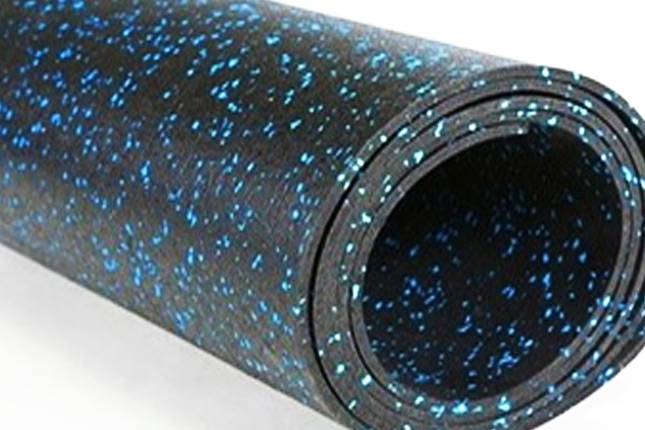
Gym flooring in South Africa falls into three main categories: solid rubber mats, interlocking tiles (in rubber or EVA foam) and standalone EVA foam mats. Rubber suits heavy weights and commercial gyms. Interlocking tiles give flexible coverage for mixed-use spaces. EVA foam fits light training, yoga and warm-up zones.
This guide compares all three on performance, cost and installation. iFoam has supplied rubber matting and EVA gym flooring from its Cape Town and Durban branches since 1997.
What to Consider Before Choosing Gym Flooring
The right flooring depends on how a space will be used, not on a general idea of “commercial quality”. Five things decide the choice before a single tile or mat is bought.
Weight load and impact. Flooring under free weights, barbells and power racks takes repeated impact that lightweight foam cannot absorb safely. A deadlift area where heavy loads are dropped regularly needs a very different floor from a stretching area.
Thickness and shock absorption. Thickness decides how much energy the floor soaks up before it reaches the slab. Thicker rubber cuts impact transmission further and protects both the matting and the concrete beneath it.
Moisture resistance. Gyms collect sweat, cleaning fluids and condensation. Closed-cell materials, including vulcanised rubber and EVA, resist liquid absorption. Open-cell foams absorb moisture and can harbour bacteria. The difference between open-cell and closed-cell foam matters directly for hygiene in busy training spaces.
Coverage area and installation. Interlocking tiles suit irregular or large spaces where cutting and reconfiguring without adhesive helps. Rubber rolls cover long, uniform areas quickly. Large solid rubber mats need more planning around edges and obstacles.
Budget per square metre. EVA foam is the most affordable entry point. Rubber interlocking tiles sit in the middle. Heavy rubber matting costs more per unit, which reflects its load-bearing durability.
Rubber Gym Mats: Best for Free Weights and Commercial Gyms
Solid rubber gym mats are the standard choice for commercial gyms, free-weight rooms and any zone where equipment is dropped or dragged. The material is vulcanised, closed-cell and dense enough to resist compression under sustained load.
Choosing a Thickness
Thickness is not a matter of taste. Each step up serves a defined use:
- 12 mm: The starting point for rubber gym flooring. Suits cardio areas, light dumbbell zones and general training floors, with good floor protection and slip resistance.
- 16 mm: The heavier option for free-weight areas. Handles dumbbell drops and resists deformation under loaded barbells at rest.
- Platforms and heavy drop zones: Where loaded barbells are dropped repeatedly, use the heaviest matting available and build a layered platform rather than relying on a single mat.
Key principle: for any zone where weights are dropped, go heavier, not thinner. Rubber at 12 mm is the minimum, and drop zones need more.
Shore hardness measures how well rubber resists indentation under load. A firmer rubber holds its shape under sustained pressure, which is what a weight room needs.
Home Gym vs Commercial Gym Use
The difference between home and commercial gym flooring is mostly about volume of use, not material type. A home gym using 20 kg dumbbells can work well on 12 mm rubber. A commercial facility running hundreds of sessions a week on the same zone needs heavier matting to keep performing over several years.
In a mixed-use space, zone the floor. Put heavy rubber under the squat rack and deadlift area, interlocking rubber tiles across the general training floor, and EVA foam mats in the warm-up and stretching area. Each zone matches its load, and overall cost stays under control because the lighter materials are only used where they are enough.
Deadlift Platforms and Heavy Drop Zones
Deadlift platforms need layered construction to absorb impact properly. A common build uses a heavy rubber base layer with a second rubber layer in the actual drop zone. This two-layer approach reduces noise transmission and stress on the slab in concrete buildings.
Browse iFoam’s sports and gym product range for thickness options and coverage formats suited to training spaces.
Interlocking Floor Mats: Versatile Coverage for Any Space
Interlocking floor tiles solve a problem that rolls and fixed mats cannot: irregular spaces. Jigsaw-edge systems fit around pillars, doorways and equipment footprints without adhesive or permanent installation.
EVA vs Rubber Interlocking Tiles
The material inside the interlocking format sets its performance ceiling.
EVA interlocking tiles are lighter, softer underfoot and easier to carry. iFoam’s interlocking EVA foam mats are 20 mm thick and 1 m by 1 m. They suit general-purpose floors, multi-use studios and spaces where mats are moved often. They are not suited to sustained heavy-weight loading.
Rubber interlocking tiles share the durability of solid rubber mats in a modular format. They are heavier, more resistant to compression and right for areas with moderate equipment use. A rubber interlocking tile will outlast an EVA tile in any high-traffic application.
The trade-off is simple: EVA interlocking tiles are lighter and cheaper; rubber interlocking tiles are heavier, denser and longer lasting.
Installation and Reconfiguration
Interlocking tiles need no adhesive for standard installations. The jigsaw edge creates a flat, stable surface when laid on a clean, level subfloor. Installation follows a simple sequence:
- Clean and dry the subfloor before laying any tile.
- Start from the centre of the room and work outward to balance edge cuts.
- Cut border tiles using a straight edge and utility knife.
- When ordering, add 10 per cent to the measured area to allow for cuts and any damaged tiles.
Tiles can be lifted and relaid without damage. This makes interlocking formats a good fit for spaces that change use over time, such as garage gyms that double as workshops, or studios that host several class formats.
EVA Foam Mats: Lightweight, Cushioned, Budget-Friendly
EVA foam (ethylene-vinyl acetate) is a closed-cell foam with a soft, cushioned feel. It is the most common material in gym warm-up areas, yoga and Pilates studios, children’s play zones and stretching areas, and it gives enough shock absorption for bodyweight exercise. For more on the material, see 12 practical uses for EVA foam.
Suitable Use Cases for EVA Foam
EVA foam performs well in these settings:
- Yoga and Pilates studios: Joint cushioning matters most here.
- Warm-up and stretching areas: These sit next to heavier training zones and see no equipment impact.
- Children’s play areas: These need a soft, safe surface.
- Light cardio and agility areas: Footwork and bodyweight drills suit a cushioned floor.
- Home exercise rooms: EVA suits rooms used only for bodyweight and resistance band training.
Limitations for Heavy Weights
Myth: Thicker foam always means better shock absorption for heavy weights.
Reality: Material density and hardness decide load capacity, not thickness alone. EVA foam at any thickness compresses permanently under repeated barbell impact. A loaded barbell dropped onto EVA will bottom out against the subfloor and dent the tile at the point of impact, leaving an uneven surface and a trip hazard.
EVA foam mats cannot support deadlifts or heavy barbell work over time. Rubber is the right material for those zones. iFoam’s foam density guide explains how density affects load response across foam types.
Side-by-Side Comparison Table
| Feature | Rubber Mats | Interlocking Tiles (EVA) | Interlocking Tiles (Rubber) | EVA Foam Mats |
|---|---|---|---|---|
| Weight capacity | High (barbells, machines) | Low to moderate (bodyweight, light dumbbells) | Moderate to high (moderate equipment use) | Low (bodyweight exercise only) |
| Shock absorption | High, rising with thickness | Moderate | Good | Soft cushioning; poor under impact loads |
| Water and moisture resistance | Excellent (closed-cell vulcanised rubber) | Good (closed-cell EVA) | Excellent (closed-cell rubber) | Good (closed-cell EVA); avoid prolonged soaking |
| Noise dampening | Excellent at heavier thicknesses | Moderate | Good | Low under impact |
| Ease of installation | Moderate (heavy to handle) | Easy (no adhesive, jigsaw edge) | Easy to moderate (heavier than EVA) | Easy (lightweight, no adhesive) |
| Relative cost | Higher | Lowest to medium | Medium | Lowest |
| Ideal use | Free weights, deadlifts, commercial gyms | Light cardio, yoga, mixed-use studios | General gym floors, moderate training | Yoga, Pilates, warm-up, children’s areas |
Which Gym Flooring Is Right for You?
The right flooring follows from an honest look at how the space will be used. These scenarios give a practical starting point:
- Heavy-weight training room or commercial free-weight area: Solid rubber matting at 12 mm minimum, going heavier for barbell drop zones.
- Dedicated deadlift or Olympic lifting platform: A layered rubber platform with extra rubber in the drop zone. No EVA product belongs here.
- Home garage gym with mixed use: Heavy rubber in the weights area, with rubber or EVA interlocking tiles over the rest of the floor. Interlocking formats handle the irregular shapes of most garages.
- Yoga, Pilates or group fitness studio: EVA foam mats or EVA interlocking tiles give the right cushioning for floor-based movement.
- Multi-purpose community or school gym: Rubber interlocking tiles give a durable base that can be reconfigured as the space changes.
- Warm-up and stretching zones next to a weights room: EVA foam mats are cost-effective where there is no equipment impact.
For projects in KwaZulu-Natal, iFoam supplies gym flooring in Durban, and in the Western Cape, gym flooring in Cape Town, for both home and commercial gyms.
Key Terms Explained
EVA foam (ethylene-vinyl acetate): A closed-cell foam. Lightweight, soft and resilient for low-impact uses. Not load-bearing under heavy weights.
Shore hardness: A scale measuring how well rubbers and foams resist indentation. Higher values mean a firmer material. Useful when comparing rubber mat grades for weight rooms.
Closed-cell rubber: Rubber in which the gas pockets are sealed, so liquid is not absorbed. Standard for gym matting exposed to sweat and cleaning agents.
Density (kg/m³): The mass per cubic metre of a foam or rubber. Higher density goes with greater load resistance and longer life, though hardness also plays a part.
ILD (indentation load deflection): A measure of foam firmness: the force needed to compress a foam sample by 25 per cent of its thickness. Used to specify foam firmness for seating and mats.
Resources
- iFoam, gym flooring.
- iFoam, interlocking rubber, EVA and PVC floor tiles.
- iFoam, sports and gym products.
- iFoam, foam density chart.
- iFoam, open-cell vs closed-cell foam guide.
- iFoam, gym flooring in Durban.
Frequently Asked Questions
What type of gym flooring is best for a home gym?
It depends on the equipment in the room. Rubber matting is right for any zone with free weights or barbells. EVA interlocking tiles work well for general flooring in spaces used for cardio and bodyweight training. A garage gym with mixed use usually does best with rubber in the weights zone and interlocking tiles elsewhere, which handles awkward room shapes economically.
Can EVA foam mats be used under a deadlift bar or heavy barbells?
No. EVA foam compresses permanently under repeated barbell impact. A loaded barbell dropped onto EVA will dent the tile and eventually reach the subfloor, so the protection is lost. Deadlift zones need heavy rubber matting, ideally as a layered platform. EVA foam is suited to bodyweight exercise, yoga, Pilates and warm-up areas.
How thick should gym flooring be?
Match thickness to use and material. Rubber at 12 mm suits light cardio and general training. Rubber at 16 mm suits free-weight areas, and drop zones need a layered platform. Interlocking EVA mats at 20 mm work well for studios, stretching and children’s areas where there is no equipment impact. Never choose thickness without considering the material.
What does gym flooring cost in South Africa?
Cost depends on the material, thickness and area covered. EVA foam mats are the most affordable, rubber interlocking tiles sit in the middle, and heavy rubber matting costs the most per square metre because of its load-bearing durability. Larger areas usually bring the cost per square metre down.
Where can I buy gym flooring in Durban or Cape Town?
iFoam has branches in Durban and Cape Town and supplies gym flooring to home and commercial customers across South Africa. It has supplied foam and rubber products since 1997. See the gym flooring pages for Durban and Cape Town for local details.
What is EVA foam?
EVA foam stands for ethylene-vinyl acetate foam. It is a closed-cell material valued for its light weight, cushioning and affordability. In gyms it is suited to yoga, Pilates, warm-up zones and children’s areas. It is not rated for heavy weights or barbell work.
Is rubber matting good for commercial gyms?
Yes. Vulcanised rubber matting is the industry standard for commercial free-weight floors, weight rooms and functional training areas. Its closed-cell structure resists moisture and bacterial growth, and its density and hardness stand up to repeated impact over years of use without deforming.
How do I install interlocking gym floor tiles?
Interlocking tiles need no adhesive for standard installations. Clean and dry the subfloor first. Start laying from the centre of the room and work toward the walls. Cut border tiles with a straight edge and utility knife. Order 10 per cent more than the measured area to allow for edge cuts. The tiles can be lifted and relaid without damage.
What gym flooring is suitable for a garage gym?
A combination works best. Lay heavy rubber matting in the weights area, especially under any squat rack, deadlift zone or dumbbell storage. Use rubber or EVA interlocking tiles for the rest of the floor. Interlocking formats handle the irregular shapes and doorway cuts of most garages without professional installation or adhesive.
How does rubber matting compare to EVA foam for shock absorption?
It depends on the load. For heavy-weight impact, rubber outperforms EVA at every thickness because its higher density and hardness resist compression without permanent damage. EVA gives better cushioning for low-impact, bodyweight and joint-contact work such as yoga and Pilates. The choice comes down to the type of load, not just softness or thickness.
How long does rubber matting last in a gym?
Well-maintained vulcanised rubber matting lasts many years in commercial use, depending on thickness, traffic and care. Regular cleaning with pH-neutral cleaners and avoiding harsh chemicals extends its life. EVA foam tiles wear faster under UV exposure and repeated loading, so they need replacing sooner in busy areas.
Does gym flooring reduce noise for neighbours or people downstairs?
Yes, though how much depends on material and thickness. Heavy rubber matting greatly reduces impact noise travelling through concrete slabs compared with a bare floor. For flats or upper floors, a layered build with extra rubber in the drop zone gives the biggest reduction. EVA foam does little for barbell drops because it rebounds rather than absorbs.
Final Thoughts
Choosing between rubber mats, interlocking tiles and EVA foam mats is a practical decision: match the material to the load, not to a general idea of quality. Rubber belongs wherever weights are dropped or dragged. Interlocking tiles suit rooms that change use or have awkward shapes. EVA foam belongs in low-impact zones where cushioning matters more than load capacity. For workshops and warehouses rather than gyms, see the guide to industrial and anti-slip flooring. Contact iFoam in Cape Town or Durban to talk through the right gym flooring for your home or commercial gym.