
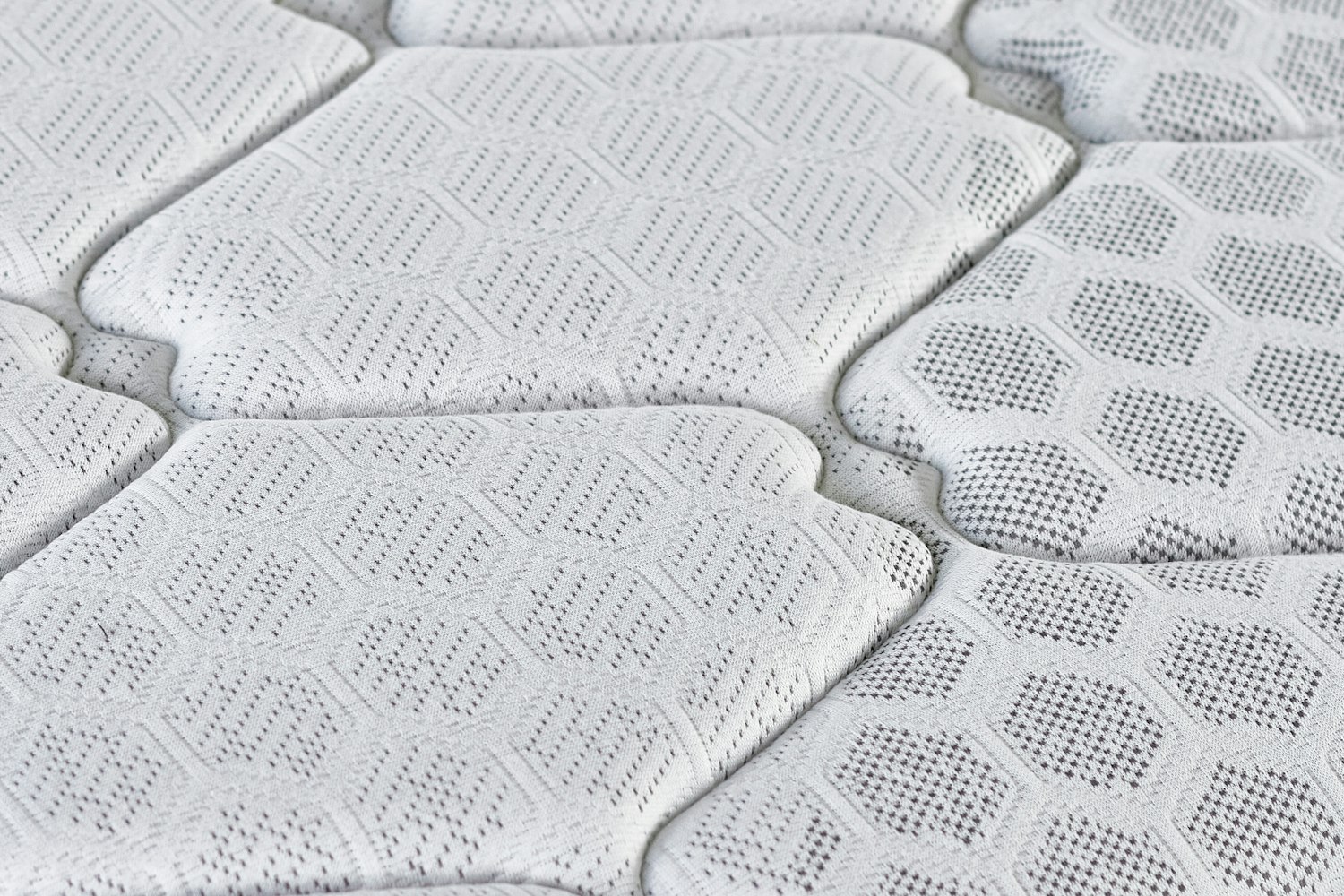
The best foam for a mattress depends on two numbers: density and firmness. For most adult sleepers, a high-density polyurethane base of around 30 to 45 kg/m³ gives durable, supportive comfort. Memory foam (visco-elastic foam) of around 50 to 80 kg/m³ adds pressure relief as a comfort layer.
This guide explains how to choose the best foam for mattresses, what thickness to specify, how long foam lasts and how to order replacement foam cut to size. iFoam supplies memory foam and cuts foam to size at its Cape Town and Durban branches.
What Makes a Foam Suitable for a Mattress?
Two measurements decide how well a foam performs in a mattress: density and firmness. Understanding both avoids costly mistakes when building a new mattress, replacing a layer or buying for an upholstery business.
Density (kg/m³) is the weight of a cubic metre of foam. It does not describe how a foam feels. It is the main predictor of how long the foam lasts: denser foam resists breaking down, recovers its shape more reliably and holds up better under years of use.
Firmness is measured on the indentation load deflection (ILD) scale, sometimes called IFD. It is the force needed to press a standard foam sample down by 25 per cent of its thickness. A lower ILD feels softer; a higher ILD feels firmer. Density and firmness are independent: a foam can be dense and soft, or light and firm, depending on how it is made.
A common mistake when ordering is to treat density and firmness as the same thing. A 40 kg/m³ foam is not automatically hard. ILD decides how it feels; density decides how long it lasts. Both should be on any mattress order.
See iFoam’s foam density chart for a full breakdown of grades.
Myth: High density means firm.
Reality: High density describes weight per volume, not surface hardness. An upholsterer ordering a dense base foam for support can ask for a medium ILD to get a balanced feel without giving up durability.
Foam Density Comparison
| Density Category | Typical Range | Durability | Suitable Use |
|---|---|---|---|
| Low density | Below about 22 kg/m³ | Shortest life | Occasional-use guest mattresses, packaging |
| Medium density | About 23 to 32 kg/m³ | Moderate | Comfort layers, sofa cushions |
| High density | About 33 kg/m³ and up | Longest life | Everyday mattresses, hotel and commercial beds |
High-Density Foam for Mattresses: What You Need to Know
High-density polyurethane foam of around 30 to 45 kg/m³ is the most widely used base for home mattresses. For hotels, guest houses and care facilities, where beds see heavier and more frequent use, the base is often specified at around 50 kg/m³ or more.
The main advantages of a high-density foam base are:
- Even support: The whole sleeping surface supports the body consistently.
- Fewer body impressions: Dense foam resists dips forming over time.
- Longer life: It outlasts lower-density foam in daily use.
- Predictable results: Upholsterers can plan layer combinations with confidence.
There are trade-offs. Denser foam lets less air through the core, which warm sleepers may notice without a breathable comfort layer or cover. It can also feel firmer at first and soften slightly over the first few weeks.
Key principle: very low-density foam is not a good choice as the main support layer in a mattress used every night, because it flattens and loses support far sooner than a dense base.
iFoam cuts foam to the exact size and thickness you need, for mattress replacement, guest house refurbishments and trade supply to upholsterers.
Which Density Grade Is Right for Your Mattress?
Body weight is the biggest factor when choosing the density of a mattress base. Heavier sleepers press harder on the foam and need a denser base to stop it bottoming out or forming body impressions early. As a general guide, lighter adults and children can use the lower end of the high-density range and most adults suit the middle of it. Heavier sleepers should go to the top of the range or above. If you are unsure, tell iFoam who will sleep on the mattress and how it will be used, and ask for a recommendation.
Sleep position matters too. Side sleepers usually prefer a slightly softer (lower ILD) comfort layer so the shoulder and hip can sink in. Back and stomach sleepers usually need a firmer (higher ILD) feel to keep the spine aligned.
How Thick Should a Foam Mattress Be?
A foam mattress usually has two layers. A comfort layer of about 8 to 12 cm gives the surface feel and spreads pressure. A support base of about 15 to 20 cm gives structure and durability. Together, most adult mattresses come to around 25 to 32 cm.
Thinner builds of about 15 to 20 cm are used for trundle beds, top bunks and children’s beds, where the load is lighter. iFoam can cut foam to whatever thickness you need.
Memory Foam: Pressure Relief and What the Numbers Mean
Memory foam, properly called visco-elastic polyurethane foam, has two defining features: it reacts to temperature and it recovers slowly. Body heat softens it so it moulds around the body and spreads the load over a wider area. When the pressure comes off, it returns slowly to its shape, which is where the name comes from.
Mattress-grade memory foam usually sits between about 50 and 80 kg/m³. Within that range, higher density generally means longer life and, often, less new-foam smell when the foam is first unwrapped.
Off-gassing is the release of volatile organic compounds (VOCs) trapped in the foam during manufacture. The smell is strongest when a new foam block or mattress is first unwrapped and fades over the first few days, faster with good ventilation. It is temporary.
Memory foam has a lower ILD than standard foam of the same density, which is why it feels softer and more body-contouring. A dense memory foam can feel much softer than a lighter, conventional foam.
iFoam supplies memory foam from its Durban branch and Cape Town branch, cut to size for mattress replacement or new builds.
Is Memory Foam Good for Back Pain?
Memory foam spreads body weight over a larger contact area than conventional foam, which reduces pressure at the hips, shoulders and lower back. For sleepers who feel pressure-point discomfort, that is relevant. iFoam supplies foam material and does not make or recommend medical products, so anyone managing a diagnosed back condition should get advice from a physiotherapist or doctor before choosing a mattress.
How Long Does Memory Foam Last?
Density is the main factor in how long memory foam lasts. A lower-density memory foam in heavy use will lose height and support sooner than a denser grade under the same conditions. The practical sign it needs replacing is performance, not age. Replace it when it has lost a noticeable amount of height, when body impressions show with no one on the bed, or when support has clearly dropped off.
Latex vs Memory Foam: A Quick Comparison
Natural latex and memory foam are both premium comfort materials, but they behave differently in ways that matter to mattress builders and upholsterers.
Natural latex is made from the sap of the rubber tree. Its open structure lets air through, so it sleeps cooler than memory foam. It springs back quickly when pressure is removed, giving a bouncier, more responsive feel, and it is very durable, though it costs more.
Memory foam moulds more closely to the body and is better at relieving pressure points. It holds more heat because it recovers slowly and breathes less. It also absorbs movement well, which suits couples who sleep at different times.
A common hybrid puts a latex topper over a high-density polyurethane base, giving the cooler, springy feel of latex at the surface while keeping the cost of the base down.
Feature Comparison: Memory Foam vs Latex
| Feature | Memory Foam | Natural Latex |
|---|---|---|
| Recovery speed | Slow | Fast |
| Reaction to temperature | High (softens with heat) | Low |
| Sleeping temperature | Warmer | Cooler |
| Pressure relief | High | Moderate to high |
| Motion isolation | High | Moderate |
| Relative cost | Moderate | Higher |
| Smell when new | Yes (temporary) | Minimal |
Replacing Mattress Foam: When and How to Order Cut-to-Size
Foam wears gradually and the loss of support is not always obvious until it becomes significant. The clearest signs that it needs replacing are:
- Body impressions: Dips are visible in the foam when the bed is empty.
- Less support: There is a noticeable drop, especially under the lower back.
- Sagging: The edges or centre have started to sink.
- Crumbling or tearing: The foam is breaking up at the surface or corners.
Replacing just the foam is a practical alternative to buying a new mattress, especially for custom-sized beds, boat berths, caravan mattresses and older furniture.
How to measure for a cut-to-size order:
- Remove the old foam from its cover or frame.
- Measure length, width and depth in millimetres.
- Decide the foam type (standard polyurethane or memory foam), density and firmness.
- Send the measurements to iFoam for a cut-to-size quote.
Lead times depend on current production. For trade and bulk orders, contact iFoam to discuss scheduling and volumes, or browse the foam and rubber product range. The guide to foam cut to size explains the process in more detail.
How to Care for a Memory Foam Mattress
Memory foam cannot be washed in the usual way. Soaking it with water or cleaning solution damages the cell structure and causes permanent deformation, so care has to work around that.
Spot cleaning:
- Blot any spill immediately with a dry cloth. Do not rub, as that spreads the stain and pushes moisture deeper.
- Put a small amount of mild upholstery cleaner, or diluted washing-up liquid, on a clean cloth.
- Dab the stain with the damp cloth, working from the outside in.
- Blot with a dry cloth to lift the moisture.
- Let the foam air-dry completely before putting covers or bedding back. This can take several hours depending on humidity.
A waterproof mattress protector keeps liquids away from the foam and is worth using on any memory foam mattress.
Key Terms Explained
Density (kg/m³): The weight of a cubic metre of foam. It decides durability, not how firm the foam feels.
ILD (indentation load deflection): A firmness rating: the force needed to press a standard foam sample down by 25 per cent of its thickness. Lower ILD feels softer; higher ILD feels firmer.
Visco-elastic foam: The technical name for memory foam. “Visco” refers to its slow, viscous recovery; “elastic” to its ability to return to shape. It softens with heat and body weight.
Off-gassing: The release of volatile compounds trapped in foam during manufacture, noticed as a new-foam smell. Temporary and reduced by ventilation.
Open-cell foam: Foam with broken cell walls that let air and moisture through. Most mattress foams are open-cell. See the open-cell vs closed-cell foam guide for more.
Closed-cell foam: Foam with sealed cells that resist moisture and compression, used for underlay, waterproofing and insulation rather than mattress comfort layers.
Polyurethane foam (PU foam): The broad family of synthetic foams made by reacting polyol with isocyanate. Standard mattress foam and memory foam are both polyurethane, with different formulations.
Latex foam: Foam made from natural rubber sap or produced synthetically, known for elasticity, durability and breathability. A separate material from polyurethane.
Resources
- iFoam, foam density chart.
- iFoam, memory foam in Durban.
- iFoam, memory foam in Cape Town.
- iFoam, open-cell vs closed-cell foam guide.
- iFoam, high-density foam for couch cushions.
- iFoam, foam and rubber product range.
Frequently Asked Questions
What density foam should I use for a mattress?
For most adults, a polyurethane base in the middle of the high-density range, roughly 30 to 45 kg/m³, suits a home mattress, with heavier sleepers moving to the top of that range or above. Memory foam comfort layers are usually somewhere between 50 and 80 kg/m³, with denser grades lasting longer in daily use.
Can I buy foam cut to size for a mattress in Durban or Cape Town?
Yes. iFoam cuts foam to size at its Durban and Cape Town branches, and memory foam is available from both. An order needs the foam type, density, firmness and exact measurements in millimetres. Trade and bulk orders are scheduled around production.
What is memory foam made of?
Memory foam is a visco-elastic polyurethane foam. It is made by adding extra compounds, and sometimes gel or graphite, to the standard polyurethane mix of polyol and isocyanate. These change how the foam reacts to heat and pressure, giving its slow recovery and body-moulding feel.
How does ILD affect mattress feel?
ILD measures how much force it takes to press foam down by a quarter of its thickness. A lower number feels softer and a higher number feels firmer. In a mattress, the comfort layer’s ILD sets the surface feel and the base layer’s ILD sets the support, so you can combine a soft top over a firm base.
Is high-density foam the same as firm foam?
No. Density measures weight per volume and predicts durability. Firmness, measured as ILD, decides how the foam feels. A dense foam can be made soft or medium, giving a comfortable but long-lasting result. Specify both numbers to get the feel and life you want.
How long does a memory foam mattress last?
It depends mainly on density and how heavily it is used. Denser memory foam lasts longer than lighter grades under the same use. Replace it when it has lost noticeable height, when body impressions show on an empty bed, or when support has clearly dropped off.
Is memory foam good for back pain?
Memory foam spreads body weight over a larger area than conventional foam, reducing pressure at the hips, lower back and shoulders. But back pain has many causes, and no foam replaces professional advice. iFoam supplies foam material and does not make or certify medical products, so speak to a physiotherapist or doctor about a diagnosed condition.
What is the difference between memory foam and regular foam?
Regular polyurethane foam pushes back straight away when compressed. Memory foam reacts to heat as well as pressure: it softens with body warmth, moulds slowly to the body and recovers slowly. Regular foam usually feels firmer and sleeps cooler; memory foam feels softer and holds more heat.
How thick should a foam mattress be?
A typical adult mattress uses a comfort layer of about 8 to 12 cm over a support base of about 15 to 20 cm, for around 25 to 32 cm in total. Thinner builds of about 15 to 20 cm suit children’s beds, trundles and caravan or boat berths. Heavier sleepers need a deeper base to avoid bottoming out.
What causes foam off-gassing?
Polyurethane foam is made through a chemical reaction that traps volatile compounds in the cells as it cures. When the foam is unwrapped, these compounds evaporate and cause the new-foam smell. It is strongest at first and fades over the first few days, faster with good ventilation.
How do I clean a memory foam mattress?
Never soak memory foam. Blot spills with a dry cloth, then dab the area with a cloth lightly dampened with diluted mild upholstery cleaner, working from the outside of the stain inwards. Blot dry and let the foam air-dry fully before replacing the cover. A waterproof protector prevents most spills reaching the foam.
Can high-density foam be used as a mattress topper?
High-density polyurethane is usually used as the support base rather than a topper, because it does not spread pressure the way memory foam or latex does. A medium-firmness, high-density foam can work as a topper where you want more support rather than more softness. For a pressure-relieving topper, memory foam is the better choice.
What foam is best for a caravan, boat or custom-sized mattress?
High-density polyurethane is a good base for caravan and boat mattresses: it holds its shape, stays dry inside an intact cover and can be cut to any shape, including L-shapes and angled corners. Most berths suit a total depth of about 10 to 15 cm because of headroom and storage. iFoam can cut irregular shapes from your measurements or a paper template.
Final Thoughts
Choosing between high-density polyurethane and memory foam comes down to two separate numbers: density for durability and ILD for feel. High-density polyurethane gives a long-lasting support base, while memory foam adds a pressure-relieving comfort layer. Body weight guides the density, and sleep position and personal preference guide the firmness. No single grade suits everyone, which is why cut-to-size foam is the practical route for replacements and custom builds.
iFoam supplies memory foam and cuts foam to size from its Durban and Cape Town branches. To choose the best foam for mattresses in your home, guest house or trade business, contact iFoam or browse the foam and rubber product range.