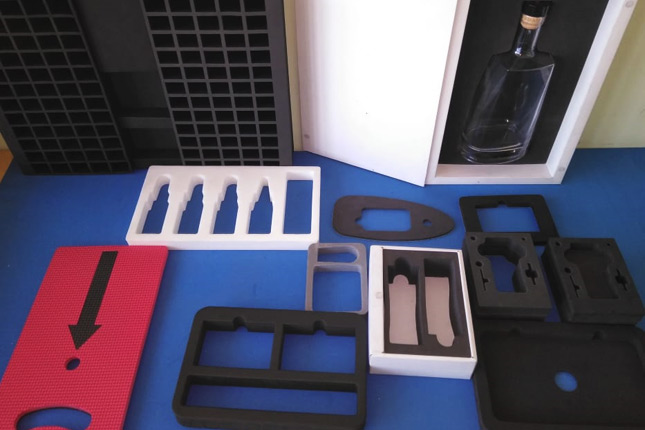

To insulate a bakkie canopy, line the inside panels with closed cell foam sheet, cut from cardboard templates and bonded with contact adhesive. Closed cell foam does not soak up water, so it stops the roof sweating without turning into a wet sponge.
iFoam cuts closed cell PE and EVA foam sheet to size at its Cape Town and Durban branches, and delivers anywhere in South Africa.
Why Insulate a Bakkie Canopy
An aluminium canopy is a thin metal skin. By day it passes the sun’s heat straight into the load bed. On cold nights, moisture from people and wet gear condenses on the chilled roof and drips back down. Fibreglass canopies heat up and sweat in the same way.
A foam lining deals with heat, condensation and noise in one job. It turns a storage box into somewhere you can sleep on a Karoo trip in summer or through a Highveld frost in winter.
Choosing Closed Cell Foam for Canopy Insulation
Every cell in closed cell foam is sealed, so water has no path through it. Our guide to open cell vs closed cell foam explains the difference. The same property makes closed cell foam the answer to what foam to use in a boat.
Our closed cell foam sheets come in crosslinked PE and EVA grades, plus AERO, an extruded closed cell foam. These three grades suit a canopy:
| Grade | Density | Shore C hardness | Listed uses |
|---|---|---|---|
| PE33 | 33 kg/m³ | Around 17 | Insulation, seals and gaskets, camping mats |
| EVA45 | 45 kg/m³ | Around 17 | Seals that need good recovery after compression |
| AERO | 33 kg/m³ | Not published | Insulation, void fillers, cushioning |
Foam Thickness and Weight
Thicker foam insulates better but costs headroom. Weight barely matters: a square metre of 10 mm PE33 weighs about 0.33 kg before adhesive. Our guide to PE vs EVA foam covers the density side of the choice.
Plain or Foil-Faced Sheet
Myth: Foil-faced foam glued to the aluminium reflects the sun’s heat.
Reality: Foil only works as a radiant barrier when it faces an air gap. Bonded flat against the metal, it passes heat straight through, so any foil face should point into the load bed.
Tools and Materials
- Foam sheet: Closed cell sheet in your chosen grade and thickness.
- Contact adhesive: Use an adhesive rated for both foam and metal.
- Degreaser: Degreaser and clean cloths prepare the panels for bonding.
- Templates: Cardboard, a marker and masking tape are all you need.
- Cutting kit: A sharp knife, spare blades and a long straight edge give clean cuts.
- Roller: A small roller presses each panel down and pushes out trapped air.
How to Insulate a Bakkie Canopy Step by Step
Templates first, glue last. That order is how to insulate a bakkie canopy without wasting foam.
Make Cardboard Templates
- Remove lights, hooks and fittings.
- Tape cardboard to each panel and trace it, including windows and ribs.
- Label each template with its position.
Cut and Test-Fit the Foam
- Lay each template on the foam and cut along a straight edge.
- Dry-fit every piece and trim until the edges butt tightly against the ribs and each other.
- On curved fibreglass, cut narrower strips that follow the curve.
Bond and Seal the Panels
- Test the adhesive on a spare piece of foam first, because some solvents attack foam.
- Degrease the panel and let it dry.
- Apply contact adhesive to both surfaces and wait until it goes tacky.
- Press each piece on from one edge, rolling out air as you go.
- Seal the seams so moist air cannot reach the metal behind the foam.
Key principle: Full adhesion and sealed seams matter more than foam thickness. Any gap behind the lining leaves cold metal for moisture to settle on.
Stopping Condensation and Rattles
Condensation forms where warm, humid air meets a surface colder than its dew point. Foam keeps the inner face of the canopy warm, but only where it is fully bonded. Ventilation still matters when people sleep inside.
A bonded lining also damps the drumming of thin panels on corrugated roads. Fill the gaps around ribs and fittings so nothing rattles. For the doors and hatches, we cut rubber seals and sealing strip for canopies. A door seal works best when it compresses by a quarter to a half of its thickness.
Keep the lining well clear of heaters, cookers and lamps that run hot. Like most foams, PE and EVA will melt and burn if they meet a flame.
Ordering Foam Cut to Your Templates
The hard part of insulating a canopy is cutting every panel cleanly. We cut closed cell foam to size at our Cape Town and Durban branches and deliver anywhere in South Africa. Our guide to foam cut to size explains how the process works. Send us three things:
- Templates: Send cardboard templates, traced outlines or measurements in millimetres for each panel.
- Canopy type: Say if the canopy is aluminium or fibreglass, and if the panels are flat or curved.
- Use: Tell us if the canopy is for storage or for sleeping, so we can suggest a grade and thickness.
Resources
- iFoam, closed cell foam sheets.
- iFoam, open cell vs closed cell foam.
- iFoam, PE vs EVA foam.
- iFoam, foam cut to size.
- iFoam, rubber seals and sealing strip.
Frequently Asked Questions
What is the best insulation for a bakkie canopy?
Closed cell foam sheet is a common choice. It is light, does not absorb water and cuts to fit curved panels. Foil-faced sheet only reflects heat when the foil faces an air gap, not when it is glued flat to the metal.
Will insulating a canopy stop condensation?
It reduces it. A lining keeps the inner surface closer to the air temperature inside, so less moisture settles on cold metal. Gaps behind the foam still collect water, and a canopy that people sleep in still needs airflow.
What glue sticks foam to an aluminium canopy?
A contact adhesive rated for foam and metal is the usual choice. Coat both surfaces, wait until they are tacky, then press them together. The aluminium must be clean and grease-free before you start.
Does canopy insulation reduce noise?
Yes. Foam bonded to the panels damps the drumming of thin aluminium on corrugated roads. Most owners notice a quieter load bed, especially once the gaps around ribs and fittings are filled.
Final Thoughts
Learning how to insulate a bakkie canopy comes down to three things: closed cell foam, a cut that fits every panel, and full adhesion with sealed seams. Send us your templates or measurements and request a quote for closed cell foam cut to insulate a bakkie canopy.