
Rubber Seals and Sealing Strip, Cut to Size

Sponge rubber, EPDM and foam sealing strip cut to your profile and length. For doors, panels, hatches, canopies and enclosures, converted on our own floors in Cape Town and Durban and delivered anywhere in South Africa.

What a rubber seal has to do

A rubber seal fills the gap between two surfaces that do not meet perfectly. It has to squash enough to close the gap under whatever pressure the closure applies, then recover its shape every time the joint is opened again. Get the material or the thickness wrong and it either leaks from day one or takes a permanent set within months.

The three things that decide it are the gap you are closing, how much force the closure applies, and what the seal is exposed to. Sunlight, water, heat, oil and ozone all attack different rubbers at different rates.

We convert sealing strip from sheet and roll rather than stocking moulded profiles, so the seal is cut to your dimensions instead of you working around a standard size.
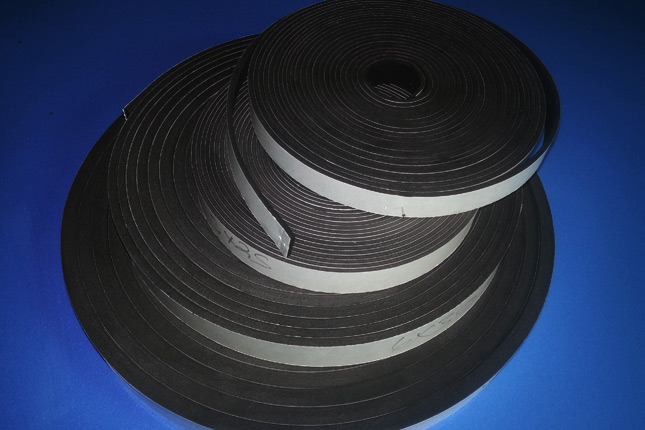
Rubber sealing strip and cut gaskets in a range of profiles and thicknesses

Materials we cut seals from

Each one suits a different exposure. If you are not sure which applies, send us the application and we will specify it.

EPDMThe workhorse for anything outdoors. Holds up to sunlight, rain, ozone and temperature swings for years without perishing, which is why it is the default for doors, hatches and weather sealing.
Sponge rubberClosed cell sponge that compresses easily and springs back. Suited to light closures where the seal must fill an uneven gap without needing much force to shut.
NeopreneResists oil, grease and moderate heat better than natural rubber. The choice around machinery, plant rooms and anywhere lubricants are present.
Solid rubberWhere the seal takes load or abrasion as well as sealing. Cut as strip, washers or gaskets to your drawing.
Foam sealClosed cell PE and EVA foam strip for dust exclusion, draught sealing and light weather sealing, often with adhesive backing.
Self-adhesive backingAny of the above supplied with adhesive tape applied, so the strip presses straight onto a clean surface without mechanical fixing.

Where sealing strip gets used

Garage doorsBottom seals and side sealing strip that close the gap against wind, rain and dust on roller and sectional doors.
Shower and screen doorsSealing strip cut to length to stop water escaping at the door edge and the floor line.
Canopies and hatchesWeather seals for vehicle canopies, access hatches and lids that need to close watertight and open freely.
Windows and doorsDraught and dust sealing on frames, panels and thresholds, cut to the profile of the gap.
Cabinets and enclosuresDust and moisture seals on electrical enclosures, control panels and equipment cabinets.
Machinery and ductingGaskets and sealing strip for flanges, inspection covers, ducting joints and plant equipment.
Send the gap, not a part numberGive us the gap width, the length you need and what the seal is exposed to. We come back with the material, the profile and a price.

Request a quote

How to specify a seal that lasts

Measure the gap when the joint is closed, not open. The seal needs to be thicker than the gap so it compresses, but not so thick that the closure will not shut or the rubber takes a permanent set. As a rule, aim for the seal to compress by a quarter to a half of its thickness.

Match the material to the exposure, not the price. Natural rubber is cheaper than EPDM and will perish in a year outdoors. Neoprene costs more than sponge and is the only sensible choice near oil. The material is a small part of the job cost and the whole of the service life.

Decide how it will be held on. Adhesive backing is quick and works well on clean, smooth, dry surfaces. Anything textured, oily, or subject to heat and movement holds better in a channel or under a clamping strip.

Order the length in one piece where you can. Joins are where seals leak first. A strip cut to run the full length of a door or hatch outlasts three shorter pieces butted together.

Frequently Asked Questions

What rubber is best for a garage door seal?
EPDM, in almost every case. A garage door seal sits in full sun and rain all year, and EPDM is the material that handles ultraviolet light, ozone and temperature swings without going brittle. Sponge rubber works where the gap is uneven and the door closes with little force, but it will not last as long outdoors.
How thick should a rubber sealing strip be?
Thicker than the gap it closes, so that it compresses when the joint shuts. A useful starting point is a strip that compresses by a quarter to a half of its thickness at full closure. Measure the gap with the door or panel closed, then tell us the figure and how hard the closure pulls shut.
Can you cut sealing strip to a length I specify?
Yes. We convert from sheet and roll on our own floors in Cape Town and Durban, so strip is cut to the width, thickness and length you give us rather than to a standard size. Adhesive backing can be applied before it ships.
What is the difference between a foam seal and a rubber seal?
Foam seal is closed cell PE or EVA foam. It is lighter, cheaper and compresses easily, which suits dust exclusion and draught sealing. Rubber seal is EPDM, neoprene or solid rubber. It costs more, resists weather, oil and heat far better, and recovers its shape through many more cycles.