
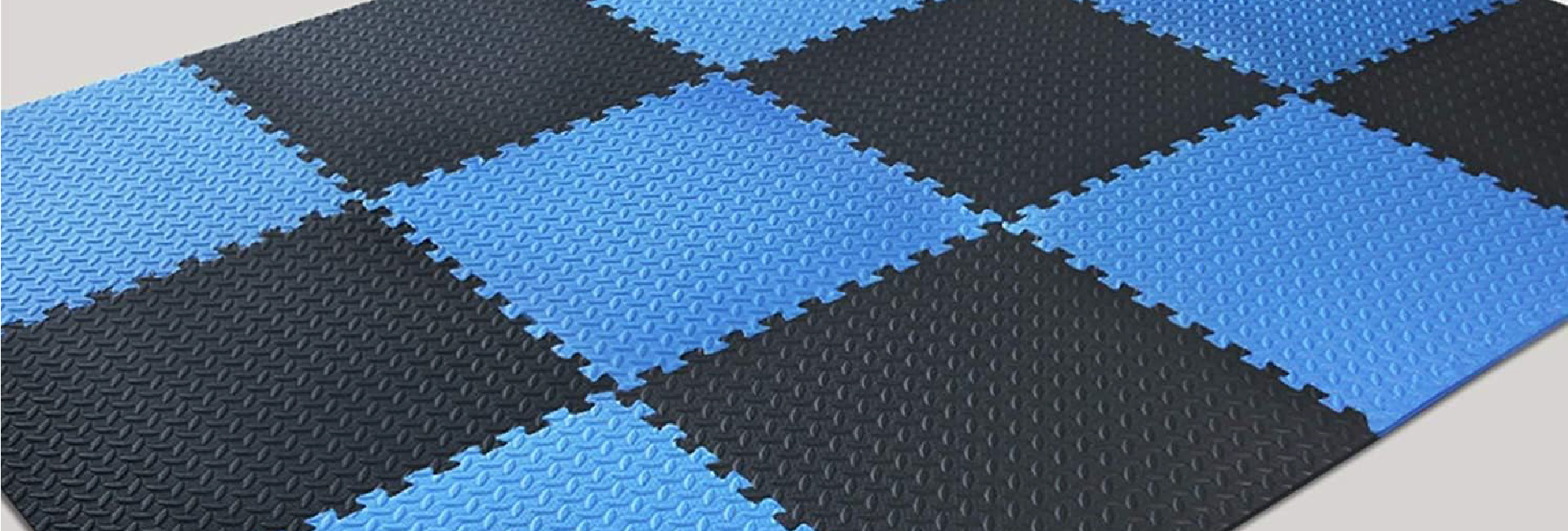
Foam mats cushion falls, soften hard floors and protect the surface underneath. For children’s play areas, nurseries and home gyms, the usual choice is interlocking EVA foam, because it is light, closed-cell and easy to clean. Rubber matting takes over where heavy weights are dropped.
iFoam supplies 20 mm interlocking EVA gym and play mats, 1 m by 1 m in dual blue and grey, from its Cape Town and Durban branches. This guide covers the main mat types, what to check for children’s safety, how to choose mats for a home gym and how to keep them clean.
Types of Foam Mats at a Glance
Foam mats differ in material, density and how they join together. Those differences decide where each one works best.
| Mat type | What it is | Best for |
|---|---|---|
| Interlocking EVA mats | Closed-cell foam tiles with jigsaw edges | Play areas, nurseries, home gyms and warm-up zones |
| Martial arts mats | High-density interlocking foam, 20 mm thick | Judo, karate and other mat sports |
| Rubber matting | Dense rubber mats and tiles | Free-weight areas and heavy equipment |
| EVA and PE foam sheet | Closed-cell sheet cut to size | Custom shapes, wall padding and underlay |
| Camping mats | 9 mm closed-cell foam mats | Camps, school outings and outdoor use |
Interlocking EVA Mats
EVA (ethylene-vinyl acetate) is a closed-cell foam. Its cells are sealed, so it does not soak up water, and it keeps its shape under repeated use. That makes it the standard material for interlocking play and gym mats.
Interlocking mats join along jigsaw edges, so the floor can follow the shape of the room. A damaged tile can be lifted out and replaced without relaying the whole floor. iFoam’s interlocking EVA mats are 20 mm thick and 1 m by 1 m, with a reversible blue and grey finish.
Rubber Matting
Rubber is denser and heavier than EVA and resists tearing and denting under heavy loads. It suits free-weight areas and commercial gyms. It is less suited to children’s play areas, where a lighter, softer surface matters more. iFoam’s industrial flooring range includes 12 mm Rampmats and 16 mm Linkmats.
EVA and PE Foam Sheet
Where a standard tile will not fit, closed-cell EVA and PE foam sheets can be cut to size. Sheet foam suits padding for walls, steps and awkward corners. PE feels firmer than EVA at the same density, and the guide to PE vs EVA foam compares them.
Are Foam Mats Safe for Children?
Safety is the first question for any mat used by children. Two things matter most: what the foam is made of, and how well it cushions and stays in place.
Formamide and Chemical Safety
Formamide is a chemical that has been found in some EVA puzzle mats, linked to certain manufacturing methods. European toy safety rules set limits for it in foam toy materials. Those limits are a useful reference when buying mats for young children.
- Ask for safety information: A supplier should be able to give you product data for foam used around young children.
- Check for formamide-free labelling: Look for it on the product or packaging when buying puzzle mats for babies and toddlers.
- Air new mats out: Unpack new mats in a ventilated room for a day or two before children use them.
- Avoid coated or glued pieces: Keep foam with adhesive backing or surface coatings away from young children.
Cushioning and Thickness
Thicker, softer foam spreads the force of a fall over a larger area. For crawling, tummy time and everyday play on the floor, 20 mm interlocking EVA gives a soft, warm surface. Climbing frames and anything else with a fall height need surfacing designed for that height.
Key principle: match the mat to the activity. Floor play and tumbling suit interlocking EVA, while equipment with a fall height needs surfacing rated for that height.
Jigsaw Mats or Solid Foam Panels?
Jigsaw mats fit any room, and damaged tiles can be swapped out. Edges can lift over time, so check them often once children are walking and running.
Solid foam panels, cut from EVA or PE sheet, give a single, unbroken surface with no joints. They suit a fixed nursery corner or play room but are harder to rearrange.
Foam Mats for Home Gyms
Gym mats need to handle load, impact and sweat. The right choice depends on the training you do.
- Stretching, yoga and bodyweight work: 20 mm interlocking EVA mats give a comfortable, grippy surface.
- Jumping and circuit training: EVA mats absorb landings well, as long as the floor underneath is firm and level.
- Free weights and dropped plates: Use rubber matting, as foam will dent under heavy, repeated drops.
- Martial arts: High-density 20 mm judo and karate mats are made for throws and falls.
For a full comparison of rubber, interlocking and EVA options, see the guide to gym flooring options. iFoam also supplies sports products such as martial arts mats and padded post protectors.
Myth: All foam mats are basically the same.
Reality: Material, density and thickness change how a mat behaves under load. A soft play mat used under a barbell will dent and lose its cushioning quickly.
How to Clean and Care for Foam Mats
EVA is closed-cell, so spills sit on the surface and wipe off. Clean with mild soapy water and a damp cloth, rinse with clean water and let the mats dry before relaying them.
Avoid strong bleach, solvents and scouring pads, which damage the surface over time. For mats used by babies, choose a fragrance-free cleaner. Lift the tiles now and then to clean underneath, especially on concrete or in damp rooms.
Buying Checklist
- Define the use: Decide if the mats are for floor play, a nursery, a home gym or a free-weight area.
- Choose the material: Use EVA for play and general training, and rubber for heavy weights.
- Measure the room: Work out the floor area in square metres, as each interlocking EVA mat covers 1 m².
- Ask about safety data: Request product information for mats used by young children.
- Plan the edges: Allow for edge tiles to be trimmed around doorways and corners.
- Check the floor: Lay mats on a clean, dry and level surface.
Key Terms Explained
EVA (ethylene-vinyl acetate): A light, closed-cell foam that cushions impact and resists water. It is the standard material for interlocking play and gym mats.
Closed-cell foam: Foam whose cells are sealed, so water and air cannot pass through. The open-cell vs closed-cell foam guide explains the difference.
Interlocking mat: A floor tile with jigsaw edges that joins to its neighbours without glue. Also called a puzzle mat or jigsaw mat.
Density (kg/m³): The weight of one cubic metre of foam. Denser foam resists denting and lasts longer under load.
Formamide: A chemical found in some EVA puzzle mats. European toy safety rules limit it in foam toy materials.
Compression set: Permanent flattening of foam after repeated or heavy loads. It is the main way worn mats lose their cushioning.
Resources
- iFoam, sports products.
- iFoam, industrial flooring.
- iFoam, interlocking rubber mats and floor tiles.
- iFoam, gym flooring Cape Town.
- iFoam, gym flooring Durban.
- iFoam, EVA foam uses.
- European Committee for Standardization, EN 71 toy safety standards.
Frequently Asked Questions
What thickness of foam mat is best for toddlers?
For everyday floor play, 20 mm interlocking EVA gives a soft, stable surface that toddlers can walk and run on. Play equipment with a fall height needs surfacing designed for that height, which standard play mats are not.
Are EVA foam mats safe for children?
EVA is widely used in children’s products. The main concern is formamide, which has been found in some imported puzzle mats. Ask the supplier for safety information, look for formamide-free labelling and air new mats out before use.
Can I use foam mats on a concrete floor?
Yes. Concrete gives a firm, level base that keeps interlocking mats flat and stable. EVA does not absorb water, but lift the mats every so often in damp rooms so the floor underneath can dry.
How do I clean foam play mats?
Wipe them with mild soapy water, rinse with a damp cloth and let them dry before relaying. Skip strong bleach, solvents and scouring pads.
What is the difference between EVA mats and rubber gym mats?
EVA mats are lighter and softer, which suits play areas, stretching and bodyweight training. Rubber is denser and heavier and stands up to dropped weights and heavy machines.
Are interlocking foam mats safe for babies?
They can be, with two checks. Confirm the mats are formamide-free or ask for safety data, and inspect the joins so lifted edges do not become a trip or chewing hazard.
Which is better for a home gym, foam tiles or rubber mats?
Interlocking EVA tiles suit most home gyms because they fit any room and are easy to lift. If you drop barbells or use heavy machines, add rubber matting in that area.
How many foam mats do I need for a room?
Each iFoam interlocking EVA mat covers 1 m². Multiply the room length by its width in metres, round up, and allow a few extra for trimming around the edges.
Can foam play mats be used outdoors?
EVA does not absorb water, so it handles covered patios and shaded play areas well. Joints can trap dirt and water, so store the mats under cover when they are not in use.
Do foam mats reduce noise?
Yes. They soften footsteps and dropped toys, which helps in flats and upstairs rooms. Thicker, denser mats cut impact noise more than thin ones.
What are judo and karate mats made of?
iFoam’s judo and karate mats are high-density interlocking foam, 20 mm thick, in dual colours. They are firmer than play mats, so they stay stable during throws and footwork.
Final Thoughts
The right foam mats come down to three things: the material, the thickness for the activity and the safety information behind the product. Interlocking EVA suits most play areas and home gyms, while rubber matting belongs where heavy weights hit the floor.
Contact iFoam in Cape Town or Durban for 20 mm interlocking EVA foam mats, martial arts mats or foam cut to size for your space.