
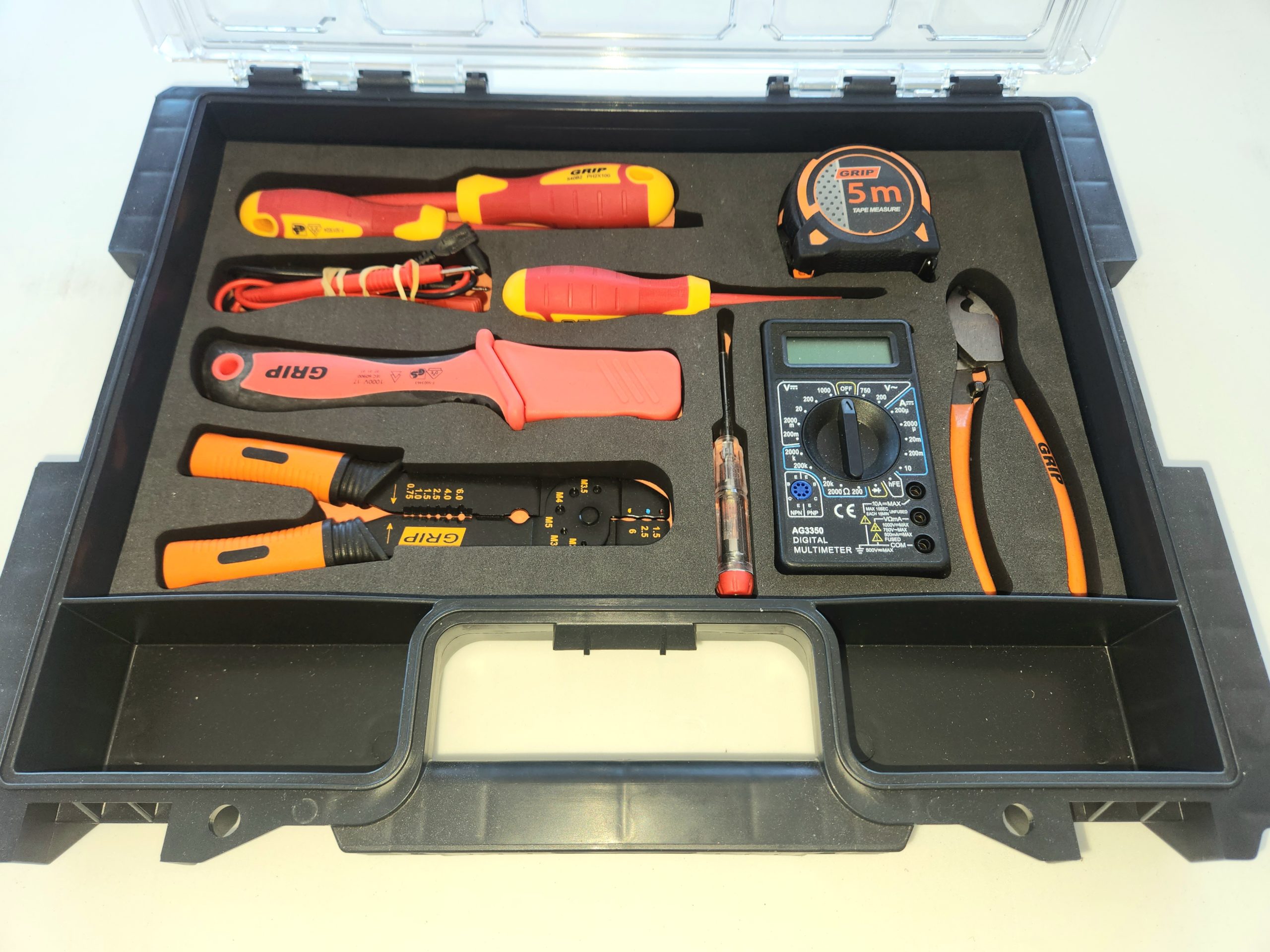
Foam packaging inserts are pre-formed or custom-cut foam pieces placed inside a shipping box or case to hold a product securely during transit. They cushion impact, absorb vibration, and prevent movement. Choosing the correct foam type and density is the critical variable: the wrong material will not protect the product, regardless of how well the outer box is constructed.
iFoam has supplied industrial foam packaging solutions across South Africa since 1997, serving electronics manufacturers, instrumentation suppliers, medical device distributors, and precision tooling companies from its Cape Town and Durban branches.
What Are Foam Packaging Inserts?
A foam packaging insert is a product-specific foam piece engineered to hold an item in a fixed position inside a shipping container. Unlike loose-fill materials such as foam peanuts or crumpled paper, inserts are shaped to the product’s profile. They are reusable across multiple shipments and provide a consistent level of protection regardless of how the box is handled.
The term “styrofoam packaging” is frequently used as a catch-all for foam inserts. In practice, styrofoam refers to expanded polystyrene (EPS), a rigid, single-use material that is appropriate for some applications. For most industrial and commercial requirements, polyethylene (PE) or polyurethane (PU) foam inserts offer superior resilience, reusability, and material versatility.
Bottom line: a product-specific foam insert eliminates transit movement entirely. Loose fill merely reduces it.
Types of Foam Used in Packaging
Four foam types are used widely in transit packaging:
- Polyethylene (PE) foam: Closed-cell structure, firm, moisture-resistant. The workhorse of industrial packaging, and the material iFoam supplies most often for transit inserts.
- Polyurethane (PU) foam: Open-cell structure, soft to medium firmness, excellent vibration damping. Used for delicate instruments and precision optics.
- Expanded polystyrene (EPS): Rigid, lightweight, single-use. Adequate for consumer appliances and lower-value goods, but not suitable for repeat-use applications.
- Anti-static and ESD foam: Specialised variants of PE or PU, formulated to control electrostatic discharge. Required for electronics, PCBs, and static-sensitive devices.
How Inserts Differ from Loose Fill
Loose-fill materials such as foam peanuts, air pillows, and void-fill foam sheets fill empty space inside a box but allow the product to move within that space. Under vibration or impact, a product packed with void fill alone will shift, rotate, and contact the box walls or other items.
A foam insert, by contrast, holds the product in a defined location. The product cannot move at all. For fragile, precision, or high-value items, this distinction is the difference between a product that arrives intact and one that does not. The most common packaging failure is not a weak box. It is a product that was allowed to move inside an otherwise sound container.
Choosing the Right Foam Material
Material selection is not a cosmetic decision. The wrong foam type will fail under transit conditions regardless of thickness or box quality. Two variables drive the choice: foam chemistry and density, measured in kg/m³.
PE Foam vs PU Foam for Packaging
The table below summarises the key differences between polyethylene and polyurethane foam for transit packaging applications.
| Property | PE Foam (Polyethylene) | PU Foam (Polyurethane) |
|---|---|---|
| Cell structure | Closed-cell | Open-cell |
| Moisture resistance | High, does not absorb water | Low, absorbs moisture |
| Firmness | Firm to semi-rigid | Soft to medium |
| Shock absorption | Good for hard impacts | Good for vibration damping |
| Chemical resistance | High | Moderate |
| Typical use | Electronics trays, tool inserts, general transit | Delicate instruments, vibration damping |
| Recyclability | Recyclable at facilities that accept it | Less recyclable |
For a detailed technical comparison of material properties, see iFoam’s guide to PE foam vs PU foam.
The commercial case is straightforward. Consider a manufacturer shipping industrial control units in EPS corner blocks: the units are protected at the corners but free to move in between, so damage claims continue. Moving to a closed-cell PE insert profiled to the unit removes the movement, and because the insert survives repeated shipping cycles, the cost per shipment falls over time rather than being written off with every box.
Anti-Static and ESD Foam
Standard PE and PU foam are not suitable for electronics packaging. During transit, movement between product and foam generates triboelectric charge, static electricity that can damage or destroy sensitive components even without any visible physical impact.
Packaging materials are classified by surface resistance under ANSI/ESD S541 and IEC 61340-5-1, the two standards that govern electrostatic protection for electronic devices:
| Classification | Surface resistance | Use in packaging |
|---|---|---|
| Conductive | Below 1 x 10⁴ ohms | Carbon-loaded (black) foam. Actively dissipates charge. Specified for the most sensitive components. |
| Static dissipative | 1 x 10⁴ to below 1 x 10¹¹ ohms | Anti-static (typically pink or blue) foam. Controls the rate of charge generation and decay. |
| Insulative | 1 x 10¹¹ ohms and above | Standard packaging foam. Must not be placed in intimate contact with static-sensitive items. |
The practical rule from ANSI/ESD S541 is that any material in intimate contact with a static-sensitive item must be dissipative or conductive, never insulative. Anti-static foam controls how quickly charge builds up; conductive foam actively drains it away. The two are not interchangeable.
Use-case triggers for ESD-grade foam include PCB transport, server component assembly, medical devices with electronic parts, and any item covered by IEC 61340 handling requirements. Because these grades are specified separately from standard packaging foam, state the classification you need (dissipative or conductive) and the required surface resistance range when you enquire, and iFoam will confirm the correct grade and availability for your application.
Closed-Cell vs Open-Cell Foam for Packaging
The cell structure of a foam determines its moisture behaviour, compressibility, and dimensional stability under load.
Closed-cell foam such as PE, EVA, and XLPE has individually sealed cells. It does not absorb water, maintains its shape under compression, and recovers consistently after impact. This makes it the default choice for general industrial transit, outdoor logistics, and any application where moisture exposure is possible.
Open-cell foam such as PU and standard ether foam has interconnected cells that allow air to move through the material. It is softer, more compressible, and provides superior damping for low-frequency vibration. For packaging precision optical instruments, scientific equipment, or anything sensitive to sustained vibration rather than sharp impact, open-cell PU foam is often the better choice.
For a deeper explanation of how cell structure affects foam performance, see iFoam’s article on open-cell vs closed-cell foam.
When to Use Custom Die-Cut Inserts
Standard foam sheets can be cut to box dimensions and used as top-and-bottom pads. For most fragile or precision products, this is not sufficient. A custom insert profiled to the exact shape of the product eliminates all lateral and rotational movement, rather than merely cushioning impact.
iFoam cuts inserts by die-cutting, CNC routing, or laser cutting, which allows any product profile to be reproduced accurately in foam at a consistent depth across production batches. That precision is the commercial difference between a shaped insert and a generic sheet.
Products That Benefit Most
The following product categories typically require custom-cut inserts rather than generic foam pads:
- Electronic assemblies and PCBs: Connectors, solder joints, and surface-mount components are damaged by impact and vibration. A custom recess holds the board clear of the box walls.
- Optical and photographic equipment: Lenses and prisms have no tolerance for lateral movement. The insert must hold the element in exactly one position.
- Precision-machined metal components: Machined surfaces scratch on contact. A form-fitting insert prevents metal-to-metal contact and surface contamination.
- Medical devices and diagnostic equipment: These must arrive undamaged and within calibration, and custom inserts support the documentation that proves it.
- Industrial tools and calibrated instruments: Torque wrenches, callipers, and gauges lose calibration if the measuring head takes an impact. A shaped insert absorbs shock at the body instead.
- Jewellery, watches, and high-value consumer goods: The cost of a single transit loss far exceeds the cost of a custom insert.
Void Fill as an Alternative
Void fill is appropriate when the product is robust, when its shape is too irregular for economical cutting, or when cost is the primary constraint. Foam void-fill sheets and air pillows reduce the impact transmitted to a product by absorbing energy before it reaches the item.
The limitation of void fill is product movement. A practical rule: if your product can move more than 5 mm in any direction inside the fully packed box, void fill alone is insufficient and a custom insert is warranted.
How to Specify Your Foam Insert
Ordering custom foam inserts requires accurate measurements and basic decisions about density and thickness. Providing complete information at the enquiry stage reduces lead time and eliminates remakes.
Measuring Your Product
Follow these steps before placing a custom foam insert order:
- Measure length, width, and height at the product’s widest points in each dimension. Use a steel rule or digital calliper, since tape measures introduce error on small items.
- Add 10 to 15 mm clearance on each side for the foam wall thickness. A 10 mm PE foam wall protects most electronics adequately, and 15 mm suits heavier or more fragile items.
- Measure protrusions separately. Connectors, cable entry points, handles, and adjustment knobs need individual relief cuts, so record their height above the product body and their position.
- Note the product weight. Weight determines the foam density required. Heavier products need denser foam to prevent compression through to the base of the insert.
- Sketch a layout for multi-component products. If several items are packed in one insert, such as a device with accessories or a tool set, sketch the intended arrangement before ordering to confirm fit and spacing.
Density and Thickness Guidelines
Density determines compressive load-bearing capacity. Foam that is too light will compress under the product’s weight, allowing the item to sink through the insert and contact the base of the box.
iFoam supplies closed-cell foam sheets in PE and EVA across a density range of 30 to 120 kg/m³, which covers the full span of transit packaging requirements. As a starting point for specification:
| Product weight | Indicative density | Typical application |
|---|---|---|
| Under 500 g | 30 to 45 kg/m³ | Light electronics, handheld instruments, small assemblies |
| 500 g to 5 kg | 45 to 70 kg/m³ | Industrial components, machined parts, mid-weight devices |
| Above 5 kg | 70 kg/m³ and up | Heavy equipment, tooling, castings |
These bands are a guide for narrowing the specification, not a substitute for confirmation. Supply the product weight with your enquiry and iFoam will confirm the grade.
Wall thickness affects the energy the insert can absorb before the product contacts the box wall. As a general reference, allow a minimum of 25 mm on all sides for standard road freight, and a minimum of 50 mm for air freight or long-distance road haulage where extended vibration exposure is expected.
Where transit protection has to be proven rather than assumed, the reference standard is ASTM D4169, Standard Practice for Performance Testing of Shipping Containers and Systems. It does not prescribe foam thickness. Instead it defines distribution cycles matched to the transport mode, such as air and motor freight, less-than-truckload, or parcel delivery, and three assurance levels: Level I is the most severe, Level II is the standard default, and Level III is the least severe. Thickness is therefore validated by testing the complete pack at the appropriate assurance level, not read off a table.
Key Terms Explained
Foam packaging insert: A product-specific foam piece shaped to hold an item in a fixed position inside a shipping container, preventing movement in any direction during transit.
Polyethylene (PE) foam: A closed-cell foam that is firm, moisture-resistant, and chemically stable. The standard choice for industrial transit packaging.
Polyurethane (PU) foam: An open-cell foam used where vibration damping is the primary requirement. Softer and more compressible than PE foam, and it absorbs moisture, so it is not suitable for wet or outdoor transit environments.
Expanded polystyrene (EPS): A rigid, lightweight bead foam commonly called styrofoam. Cut by hot wire, adequate for single-use consumer packaging, and not reusable across multiple shipments.
Anti-static foam: A static dissipative foam, typically pink or blue polyethylene, formulated to control the rate at which triboelectric charge builds during transit. Required for packaging moderately static-sensitive electronic components.
ESD (electrostatic discharge) foam: A carbon-loaded, black, conductive foam with a surface resistance below 1 x 10⁴ ohms that actively dissipates electrostatic charge. Required for the most sensitive electronics, including PCBs, processors, and memory modules. Not interchangeable with standard anti-static foam.
Closed-cell foam: Foam in which individual cells are sealed and independent. It does not absorb water, maintains dimensional stability under load, and recovers consistently after impact.
Open-cell foam: Foam in which cell walls are broken, allowing air and moisture to move through the structure. Softer and better at vibration damping than closed-cell foam of equivalent density.
Die-cut insert: A foam insert shaped by a cutting die, CNC router, or laser to reproduce the exact profile of a product, eliminating lateral and rotational movement inside the container.
Density (kg/m³): The mass of foam per cubic metre. Higher density means more material per unit volume, greater load-bearing capacity, and better resistance to compression set under product weight.
Void fill: Loose-fill material such as foam peanuts, air pillows, or void-fill sheets used to occupy empty space inside a box. It reduces impact energy but does not prevent product movement.
Triboelectric charge: Static electricity generated when two dissimilar materials move against each other. In transit packaging, movement between a product and an insulative foam insert can produce charge levels sufficient to damage sensitive electronic components.
Sourcing Foam Packaging Inserts in South Africa
iFoam manufactures and supplies foam packaging inserts to industrial and commercial customers across South Africa from facilities in Durban and Cape Town. With supply experience dating back to 1997, iFoam serves sectors including electronics, instrumentation, tools, and medical devices.
Custom inserts are produced to customer-supplied dimensions and cut by die-cutting, CNC, or laser depending on the profile required. To initiate an order, provide your product measurements, weight, and preferred foam type. An iFoam technical advisor will confirm the specification and return a quote.
Customers in KwaZulu-Natal can find information on lead times and local collection at the foam packaging in Durban service page. Customers in the Western Cape should visit the foam inserts in Cape Town page for Cape Town-specific details.
Resources
- ASTM International, ASTM D4169, Standard Practice for Performance Testing of Shipping Containers and Systems.
- ANSI/ESD S541, Packaging Materials for ESD Sensitive Items, ESD Association.
- IEC 61340-5-1, Electrostatics: Protection of Electronic Devices from Electrostatic Phenomena.
- iFoam, PE Foam vs PU Foam.
- iFoam, Open Cell vs Closed Cell Foam.
Frequently Asked Questions
What is a foam packaging insert and how does it differ from void fill?
A foam packaging insert is a product-specific foam piece shaped to hold an item in a fixed position inside a shipping container. Unlike void-fill materials such as foam peanuts or air pillows, which merely fill empty space, a profiled insert eliminates all movement in any direction. This distinction is critical for fragile, precision, or high-value goods: a product that cannot move cannot be damaged by transit impact or vibration.
What is the best foam for packaging fragile items?
For most fragile items, closed-cell polyethylene foam provides the best combination of shock absorption, moisture resistance, and dimensional stability. For very delicate instruments susceptible to sustained vibration rather than sharp impact, open-cell polyurethane foam offers superior damping. The choice depends on the product’s weight, fragility, and moisture exposure during transit. When in doubt, specify PE foam as the default for general industrial applications.
What is the difference between PE foam and PU foam for packaging?
PE foam is closed-cell, firm, and moisture-resistant, making it the standard choice for industrial transit and outdoor logistics. PU foam is open-cell, softer, and better at absorbing sustained low-frequency vibration, which suits precision instruments and delicate goods. The cell structure is the primary distinguishing factor, not simply firmness. For a full technical comparison, see iFoam’s guide to PE foam vs PU foam.
What is anti-static foam and when do I need it?
Anti-static foam is a static dissipative packaging material, with a surface resistance between 1 x 10⁴ and 1 x 10¹¹ ohms, that controls triboelectric charge build-up during transit. It is required whenever you package PCBs, processors, memory modules, or other devices covered by IEC 61340 handling requirements. Standard PE or PU foam is insulative and can generate damaging charge levels when the product moves against it. Anti-static foam is typically pink or blue polyethylene, while conductive ESD foam, which is black, is required for the most sensitive components.
What is ESD foam and how is it different from regular anti-static foam?
ESD foam is a carbon-loaded, black, conductive foam with a surface resistance below 1 x 10⁴ ohms, which allows it to actively dissipate electrostatic charge. Anti-static foam sits in the static dissipative band, from 1 x 10⁴ to below 1 x 10¹¹ ohms, and controls the rate of charge generation rather than draining it away. ESD foam is the correct specification for PCBs, processors, memory modules, and any component with the most stringent electrostatic sensitivity requirements under ANSI/ESD S541.
Why do fragile products still get damaged in foam-lined boxes?
The most common cause is product movement inside the container. Foam sheets lining the box walls absorb impact energy but do not prevent the product from shifting laterally. If the product can move more than 5 mm in any direction when the box is fully packed, the foam lining alone is insufficient. A custom insert that grips the product profile eliminates this movement entirely, which is why shaped inserts outperform generic foam pads for fragile, precision, or high-value goods.
Can I get custom die-cut foam inserts in South Africa?
Yes. iFoam supplies custom foam packaging inserts from Durban and Cape Town, cut by die-cutting, CNC, or laser. Provide product dimensions in millimetres, the product weight, the foam type required, and any protrusions or special features that need relief cuts. iFoam’s team will confirm the specification and return a quotation. This service is available to both trade customers and individual buyers.
How do I measure my product for foam insert packaging?
Measure the product’s maximum length, width, and height at the widest points using a steel rule or digital calliper. Add 10 to 15 mm on each side for foam wall thickness, where 10 mm is adequate for most electronics and 15 mm suits heavier or more fragile items. Note any protrusions such as connectors, handles, or cable entries and measure their height and position separately. Include the product weight so iFoam can recommend the correct density. For multi-component products, sketch the intended layout before ordering.
How thick should foam packaging inserts be?
Wall thickness determines how much impact energy the insert can absorb before the product contacts the box wall. As a general guideline, allow a minimum of 25 mm on all sides for standard road freight and 50 mm for air freight or long-distance road haulage where extended vibration exposure is expected. Where protection must be demonstrated rather than assumed, validate the complete pack against the relevant ASTM D4169 distribution cycle and assurance level rather than relying on thickness alone.
What foam density should I specify for a packaging insert?
Density governs compressive load-bearing capacity. Foam that is too light will compress under the product’s weight, allowing the product to sink through the insert and contact the box base. iFoam supplies closed-cell PE and EVA foam from 30 to 120 kg/m³. As a starting point, 30 to 45 kg/m³ suits light electronics under about 500 g, 45 to 70 kg/m³ suits heavier industrial components, and grades above 70 kg/m³ are specified where the insert carries significant static load. Provide the product weight at enquiry stage so iFoam can confirm the appropriate density.
Is foam packaging reusable across multiple shipments?
Custom inserts in closed-cell PE foam are reusable across many shipment cycles, provided the product and box dimensions remain consistent. Closed-cell foam does not absorb moisture, does not compress permanently under normal transit loads, and returns to its original shape after each use. EPS, or styrofoam, is not reusable in the same way, as it chips and crumbles under repeated handling. For operations with high outbound shipment volumes, reusable PE inserts typically reduce per-shipment packaging cost over time compared with single-use alternatives.