
Foam insulation has become a popular choice in residential, commercial, and industrial construction because it offers strong thermal performance, air sealing and long-term durability. Yet many property owners, contractors and developers still ask the same question before starting a project: should you use open cell foam or closed cell foam?
The answer depends on the building, climate, budget and performance requirements.
Both types of spray foam insulation expand to fill gaps and create an insulating barrier, but they behave very differently once installed. One prioritises flexibility and sound absorption. The other focuses on strength, moisture resistance and high insulation value.
Choosing the wrong option can lead to poor energy efficiency, trapped moisture or unnecessary costs. Choosing the right one can improve comfort, reduce energy bills and extend the lifespan of the structure.
Understanding the differences between open cell and closed cell foam makes it much easier to select the right insulation for each application.
What Is Spray Foam Insulation?
Spray foam insulation is created when two liquid components combine and expand into foam during application. The material adheres to surfaces and fills cracks, joints and cavities that traditional insulation may miss.
Unlike fibreglass batts or loose-fill insulation, spray foam creates both insulation and air sealing in one system. This helps reduce heat transfer and air leakage through walls, roofs and ceilings.
The two main categories are open cell foam and closed cell foam. While they may look similar after installation, their structure, density and performance differ significantly.
What Is Open Cell Foam?
Open cell foam is a lighter, softer insulation material with cells that are not fully enclosed. The structure contains tiny air pockets that create a sponge-like texture.
Because the cells remain open, the foam expands aggressively during installation. This allows it to fill irregular gaps and cavities very effectively.
Open cell foam is typically lower in density than closed cell foam and remains slightly flexible after curing.
Key Characteristics of Open Cell Foam
Lower Density and Softer Texture
Open cell foam is softer and less rigid than closed cell foam. It compresses more easily and is not designed to add structural strength.
This flexibility can be useful in buildings where slight movement or expansion occurs over time.
Strong Sound Absorption
One of the biggest advantages of open cell foam is its acoustic performance. The softer structure helps absorb airborne sound, making it popular for interior walls, ceilings and partitioning.
It is commonly used in:
- Residential walls
- Home theatres
- Offices
- Apartment buildings
- Studios
- Interior partitions
Excellent Expansion Capability
Open cell foam expands significantly during installation. This makes it effective for sealing awkward spaces, cracks and hard-to-reach cavities.
Contractors often use it in roof spaces and wall cavities where full coverage matters.
Lower R-Value Per Inch
Open cell foam generally provides a lower insulation value per inch compared to closed cell foam. This means thicker applications may be needed to achieve the same thermal performance.
Even so, it still performs well in many residential and commercial applications.
Vapour Permeability
Open cell foam allows some moisture vapour to pass through. This can be beneficial in certain wall assemblies because it allows structures to dry more easily.
At the same time, it means open cell foam is not ideal for areas exposed to high moisture or direct water contact.
What Is Closed Cell Foam?
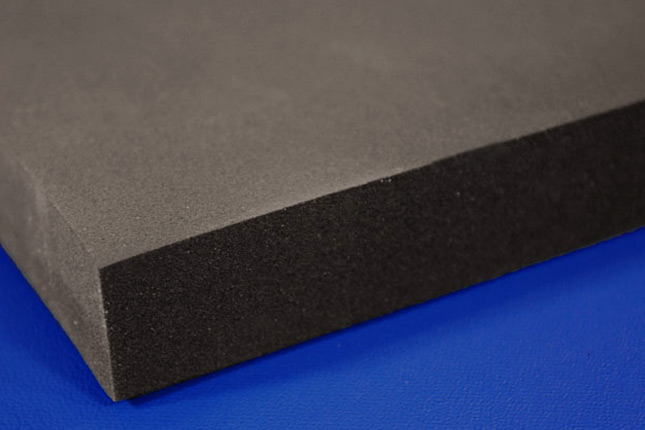
Closed cell foam has a denser structure where the cells are fully enclosed and tightly packed together. The material cures into a rigid, hard foam with strong insulating performance.
The closed structure traps insulating gas within the cells, which helps improve thermal resistance.
Closed cell foam is heavier, stronger and more moisture resistant than open cell foam.
Key Characteristics of Closed Cell Foam
Higher Insulation Value
Closed cell foam provides a higher R-value per inch than open cell foam. This makes it useful where space is limited but strong insulation performance is needed.
It is often selected for:
- Commercial buildings
- Industrial facilities
- Cold storage
- Metal buildings
- Exterior walls
- Roofing systems
Moisture Resistance
Because the cells are sealed, closed cell foam resists water absorption far better than open cell foam. This makes it suitable for environments exposed to moisture, humidity or condensation.
It can help reduce the risk of water penetration in certain applications.
Increased Structural Strength
Closed cell foam becomes rigid after curing and can add structural reinforcement to walls, roofs and panels.
This added strength is especially valuable in industrial and commercial environments where durability matters.
Air Barrier Performance
Like open cell foam, closed cell foam creates an effective air seal. However, its dense structure can provide an even stronger barrier against unwanted air movement.
Reducing air leakage can improve energy efficiency and indoor climate control.
More Compact Installation
Because of its higher insulation value, thinner layers of closed cell foam can often achieve strong thermal performance.
This is useful in areas where cavity depth is limited.
Open Cell vs Closed Cell Foam: Main Differences
Although both products provide insulation and air sealing, their performance differs in several important areas.
Density
Open cell foam is light and soft.
Closed cell foam is dense and rigid.
Insulation Performance
Closed cell foam generally delivers a higher R-value per inch.
Open cell foam may require thicker applications to reach the same insulation level.
Moisture Resistance
Closed cell foam offers much stronger moisture resistance.
Open cell foam allows more vapour movement.
Sound Absorption
Open cell foam performs better for sound reduction because of its softer structure.
Closed cell foam is less effective acoustically.
Structural Strength
Closed cell foam can strengthen surfaces and assemblies.
Open cell foam does not provide structural reinforcement.
Cost
Open cell foam is usually more affordable because it uses less material density.
Closed cell foam tends to cost more due to its higher performance and density.
When to Use Open Cell Foam
Open cell foam works best in areas where sound absorption, flexibility and cost-effectiveness matter more than maximum moisture resistance.
Interior Residential Walls
Bedrooms, offices and living spaces benefit from the sound control provided by open cell foam.
It helps reduce noise transfer between rooms while improving thermal insulation.
Roof Cavities and Attics
Open cell foam is often used in roof structures where expansion and air sealing are priorities.
Its ability to fill irregular spaces makes it useful for complex roof geometries.
Mild and Dry Climates
In drier environments where moisture exposure is less severe, open cell foam can provide effective insulation at a lower cost.
Budget-Conscious Projects
Projects needing large insulation coverage at a lower price point may benefit from open cell foam.
It delivers good overall performance without the higher cost of dense foam systems.
When to Use Closed Cell Foam
Closed cell foam is best suited to demanding environments where insulation performance, strength and moisture resistance are critical.
Exterior Walls
Closed cell foam performs well in exterior wall systems where thermal performance and moisture control matter.
Its rigidity can also improve overall wall durability.
Industrial and Commercial Buildings
Warehouses, factories and industrial facilities often use closed cell foam because it handles demanding conditions well.
It provides strong insulation and can help control condensation on metal surfaces.
High-Moisture Environments
Areas exposed to humidity or moisture benefit from the water-resistant properties of closed cell foam.
Common examples include:
- Cold storage facilities
- Basements
- Coastal buildings
- Refrigerated spaces
- Agricultural structures
Limited Space Applications
Where insulation depth is restricted, the higher R-value of closed cell foam becomes a major advantage.
This is useful in retrofit projects and compact wall systems.
Roofing Systems
Closed cell foam is commonly used in roofing because it resists water penetration while adding insulation and strength.
Which Foam Is Better for Energy Efficiency?
Both open cell and closed cell foam improve energy efficiency by reducing air leakage and heat transfer.
Closed cell foam generally offers stronger thermal resistance because of its higher R-value. However, open cell foam can still perform extremely well when installed at the correct thickness.
The quality of installation often matters more than the product alone. Gaps, poor coverage or improper application can reduce performance significantly.
Proper installation by experienced professionals is essential for both foam types.
Common Mistakes When Choosing Spray Foam
One of the biggest mistakes is selecting insulation based on price alone.
Cheaper insulation may not perform well in high-moisture or demanding environments. On the other hand, using expensive closed cell foam in areas where open cell foam would work perfectly may increase costs unnecessarily.
Another common issue is ignoring ventilation and moisture management. Every building assembly should be evaluated as a complete system rather than focusing only on insulation thickness.
Climate, wall design, roof structure and intended use all affect the right choice.
Maintenance and Lifespan
Both open cell and closed cell foam can last for decades when properly installed and protected from damage.
Unlike some traditional insulation materials, spray foam does not easily sag or settle over time.
Closed cell foam tends to offer greater durability in harsh conditions because of its rigid structure and moisture resistance.
Regular inspections are still important, especially after roof leaks, structural movement or renovation work.
Final Thoughts
Open cell and closed cell foam both provide effective insulation and air sealing, but they are designed for different situations.
Open cell foam is softer, lighter and better for sound absorption and cost-effective coverage. It works well in interior applications and areas with lower moisture exposure.
Closed cell foam delivers stronger insulation, moisture resistance and structural support. It is ideal for industrial, commercial and high-performance building environments.
The best choice depends on the project goals, environmental conditions and long-term performance requirements. When the right foam is matched to the right application, spray foam insulation can deliver lasting comfort, efficiency and durability.