
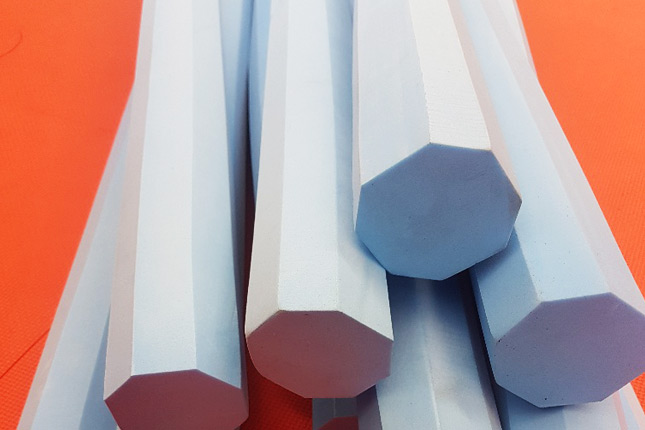
Pool noodles are closed-cell polyethylene foam cylinders used for swimming support, water aerobics, edge protection, crafts and light industrial padding. Their buoyancy, flexibility and soft, safe surface make them useful well beyond the pool, and schools, gyms, therapy practices and small manufacturers buy pool noodles in bulk for year-round use.
iFoam supplies pool noodles in a range of sizes and colours from its Cape Town and Durban branches, for single orders and bulk quantities.
What Makes Pool Noodles So Versatile?
Pool noodles are made from expanded polyethylene (EPE), part of the closed-cell foam family. The same material is used in protective packaging, pipe lagging, sports padding and industrial gaskets. Understanding the material explains why noodles perform so reliably in so many settings.
The closed-cell structure is what matters. Each cell in the foam is sealed, so water cannot soak in. That gives pool noodles their buoyancy, their ability to bounce back after being squashed and their resistance to repeated wetting and drying. The foam does not absorb chemicals, does not breed bacteria the way open-cell foam can and does not splinter or crack on impact. For more on the difference, see the open-cell vs closed-cell foam guide.
A typical pool noodle is roughly 60 to 70 mm across and about 1.5 m long, with a hollow core. The consistent shape means noodles can be cut, stacked, split lengthways or shaped without special tools. The hollow core adds to their usefulness: it slides over rods, rails and conduit as a protective sleeve.
Key principle: pool noodles are a closed-cell PE foam product that is water-resistant, buoyant and impact-absorbing, which is why they work as well in a workshop or classroom as they do in a pool.
Fitness and Water Aerobics
Water takes much of the body’s weight off the joints, which makes pool noodle exercises low impact and well suited to rehabilitation and general conditioning.
That buoyancy is the basis of aqua fitness. When someone pushes a noodle down against the water, the effort needed to sink it creates resistance without the joint stress of weight training on land. The same principle applies to sideways pulls, twisting movements and balance work, where the noodle acts as both support and resistance in one piece of equipment.
Pool Noodles as a Fitness Tool: What Instructors Use Them For
Aqua fitness instructors and physiotherapists use pool noodles in several ways. Held under the arms, a noodle works as a kickboard so the swimmer can focus on leg kicks. Pressed below the surface, it builds upper body and core strength against the water’s push. Threaded between the legs, it supports water running without the need to tread water.
Gyms, physiotherapy practices and school swimming programmes that buy swimming noodles in bulk pay noticeably less per noodle than they would at retail. A school running many sessions a week across several classes keeps dozens of noodles in constant use, and at that volume bulk pricing makes a real difference to running costs.
Myth: Pool noodles are too soft to give meaningful resistance training.
Reality: Pushing a foam noodle under the water creates a load that works the shoulders, back and core. The resistance rises and falls naturally with the speed and range of the movement, which is exactly what makes it useful in rehabilitation, where the load needs to be graded.
Creative Craft and Decoration Uses
Pool noodles cut cleanly with a sharp bread knife or utility knife, with no special tools, no dust and no splintering. That makes them practical for schools, event companies and craft suppliers, not only for home hobbyists.
Wreath-making is a popular use. The noodle is bent into a circle, the ends are joined with a short skewer or dowel, and the ring is covered with fabric, flowers or ribbon. The foam holds its shape without glue and accepts hot glue without melting, an advantage over polystyrene alternatives.
Schools and early childhood centres use noodles as the base for costume props such as swords, wands and crowns. They are safe because the foam is light and soft enough not to hurt on contact. Party suppliers and event planners making props for schools, corporate events and themed parties buy foam noodles in bulk to keep costs down.
Occupational therapists use pool noodles as tactile play props. The consistent texture, squashiness and round shape suit hand-strengthening exercises and sensory activities in children’s therapy. A busy practice keeps a stock of clean noodles on hand, which makes a bulk order more sensible than buying retail.
Safety and Edge Protection Applications
Sharp edges on warehouse racking, school furniture, gym equipment and workbenches are a constant low-level injury risk. Slit lengthways along one side, a pool noodle slides straight onto these edges with no adhesive, tools or installation skills needed.
The slit exposes the hollow core, and the noodle is pressed onto the edge of a shelf, bench leg, door frame or trampoline frame. The foam squeezes slightly as it goes on, gripping the edge so it stays in place without tape or fixings.
Schools use this for corner and edge padding on furniture, creches use it to protect little fingers at door frames, and care facilities use it on bed rails to reduce knocks during transfers.
The table below compares pool noodles with other common edge protection options.
Pool Noodle vs Common Edge Protectors
| Material | Shock Absorption | Water Resistance | Relative Cost | Ease of Installation |
|---|---|---|---|---|
| Pool noodle (PE foam) | Good: absorbs impact without cracking | Excellent (closed-cell) | Lowest | Slit and slide on, no tools |
| Commercial foam edge guard | Good | Good | Higher | Adhesive-backed; needs a clean, dry surface |
| Rubber edge bumper | Very good | Excellent | Highest | Screws or adhesive; needs tools and preparation |
| Carpet offcut | Poor | Low (absorbs water and dirt) | Similar | Cut and tape; breaks down when wet |
Because pool noodles need no adhesive, they suit places where staff change often or where surfaces cannot be altered. Seasonal trampoline padding at a school, for example, can be replaced in minutes with noodles for a fraction of the cost of purpose-made padding.
Industrial and Commercial Uses
The hollow core of a pool noodle fits over many small pipes and conduits. That makes noodles handy pipe lagging for exposed runs in garages, workshops, outbuildings and on farms, where function matters more than looks. Slit lengthways, one noodle covers its own length of pipe in a single piece, reducing heat loss and protecting the pipe from knocks.
Boat owners use pool noodles as bumpers along dock edges and hull sides. A noodle that falls in the water floats rather than sinks, and the closed-cell foam resists salt water over repeated wetting. Small boat owners in Durban and Cape Town use them as a cheap alternative to purpose-made dock fenders.
In garages, a noodle fixed to the wall at car-door height prevents dents and paint damage when doors open in a tight space. Property managers, caravan parks and parking facilities with many bays use this at scale, which makes bulk buying the sensible route.
Small manufacturers and packers use noodle sections as protective void fill for fragile or awkwardly shaped items. The round shape nests around bottles, flanges and mechanical parts and cushions them without the cost of custom foam packaging inserts.
For related industrial jobs, iFoam also supplies closed-cell foam sheets in a range of thicknesses and densities.
How to Buy Pool Noodles in Bulk in South Africa
iFoam supplies pool noodles from its Cape Town and Durban branches to schools, gyms, occupational therapy practices, craft suppliers, event companies and industrial buyers across South Africa. The team can advise on quantities, lead times and bulk pricing.
Demand climbs from November as the swimming season peaks. Schools and gyms restocking for summer, and craft suppliers preparing for December projects, should confirm availability and lead times well ahead of the rush.
Pool noodles come in a range of sizes and colours. If you need a particular length, thickness or a single colour in bulk, state it when you enquire, as custom runs depend on production scheduling and minimum quantities.
The buying process is simple. Tell iFoam how many you need, the size and colour, and what they are for if a custom size is involved. Then confirm the lead time against your project dates.
Resources
- iFoam, pool noodles in Cape Town.
- iFoam, pool noodles in Durban.
- iFoam, open-cell vs closed-cell foam guide.
- iFoam, PE foam vs PU foam.
- iFoam, sports products.
Frequently Asked Questions
What are pool noodles made of?
Pool noodles are made from closed-cell expanded polyethylene (EPE) foam. The material is buoyant, water-resistant and flexible, and belongs to the same foam family used in protective packaging, pipe lagging and sports padding. It does not absorb water, does not splinter and keeps its shape after being squashed repeatedly.
Can pool noodles be used for water aerobics?
Yes. Swimming noodles are a standard tool in aqua fitness classes and physiotherapy programmes. They are used for support during water running, as resistance tools for upper body exercises, as balance aids and as props in aqua yoga. Their consistent size makes them easy to grip and use in many exercise formats.
How do I cut a pool noodle?
A sharp bread knife or utility knife cuts the foam cleanly. Mark the line with a permanent marker, hold the noodle firmly on a flat surface and cut with a slow sawing motion rather than pressing straight down. For craft work that needs a smooth finish, sand the cut edge lightly with medium-grit sandpaper.
What size are pool noodles?
Most pool noodles are a little over 6 cm across and around 1.5 m long, with a hollow centre. Sizes vary between products, and iFoam supplies pool noodles in a range of sizes. Confirm the exact dimensions when ordering if they matter for your job, such as fitting over a pipe or rail.
Where can I buy pool noodles in bulk in South Africa?
iFoam supplies pool noodles in bulk from its Cape Town and Durban branches, in a range of sizes and colours. Lead times depend on quantity and production scheduling, so confirm them early, especially ahead of the summer peak from November.
Are pool noodles safe for children?
Pool noodles are widely used by children because the foam is light, soft and does not splinter or form sharp edges when cut or squashed. Schools, creches, therapy practices and public pools use them for this reason. As with any pool toy, a noodle is a play aid, not a life-saving device, and children in water still need supervision.
What is the difference between pool noodles and pipe insulation foam?
Both are hollow cylinders of closed-cell polyethylene foam, but pipe insulation is made with thinner walls sized to fit specific pipe diameters. A pool noodle can work as lagging on non-critical pipes, but purpose-made pipe insulation gives a tighter fit on standard plumbing sizes.
How long do pool noodles last outdoors?
Polyethylene foam does not absorb water, which gives pool noodles good outdoor durability. Sunlight is the main thing that wears them down, causing fading and surface breakdown over time. Noodles stored indoors or in the shade between uses last considerably longer than those left out in the sun.
Can pool noodles be used for yoga and Pilates?
Yes, as a low-cost prop. Placed lengthways on a mat, a noodle gives a rounded support for chest-opening and supported back-bend positions. It is softer than a purpose-made foam roller, which is denser and usually solid, so it is not a direct replacement. It does the same job for a fraction of the price in busy class programmes.
Why are pool noodles hollow?
The hollow core reduces weight and material cost without losing much buoyancy, because the foam wall itself traps the air that provides lift. It also adds usefulness: the core slides over rods, conduit and pipe ends, which is what lets noodles work as pipe sleeves, rail guards and slide-on edge bumpers.
Can I order pool noodles in a specific colour in bulk?
Pool noodles come in a range of bright colours. If you need a specific colour for a bulk order, state it when you enquire. Single-colour bulk runs depend on production scheduling and may carry a minimum quantity, so check availability with iFoam before you finalise your order.
Final Thoughts
Pool noodles are a closed-cell PE foam product whose properties suit far more than recreational swimming. Water resistance, buoyancy, a soft surface, consistent shape and easy cutting make them a practical, low-cost foam for fitness programmes, crafts and education, edge protection and light industrial jobs.
For South African schools, gyms, therapy practices, craft suppliers and small manufacturers, buying pool noodles in bulk from a local foam supplier lowers the cost per noodle and keeps quality consistent across large orders. For other uses of soft, closed-cell foam, see 12 practical uses for EVA foam. Contact iFoam’s Cape Town or Durban branch to talk through quantities, lead times and pricing.