
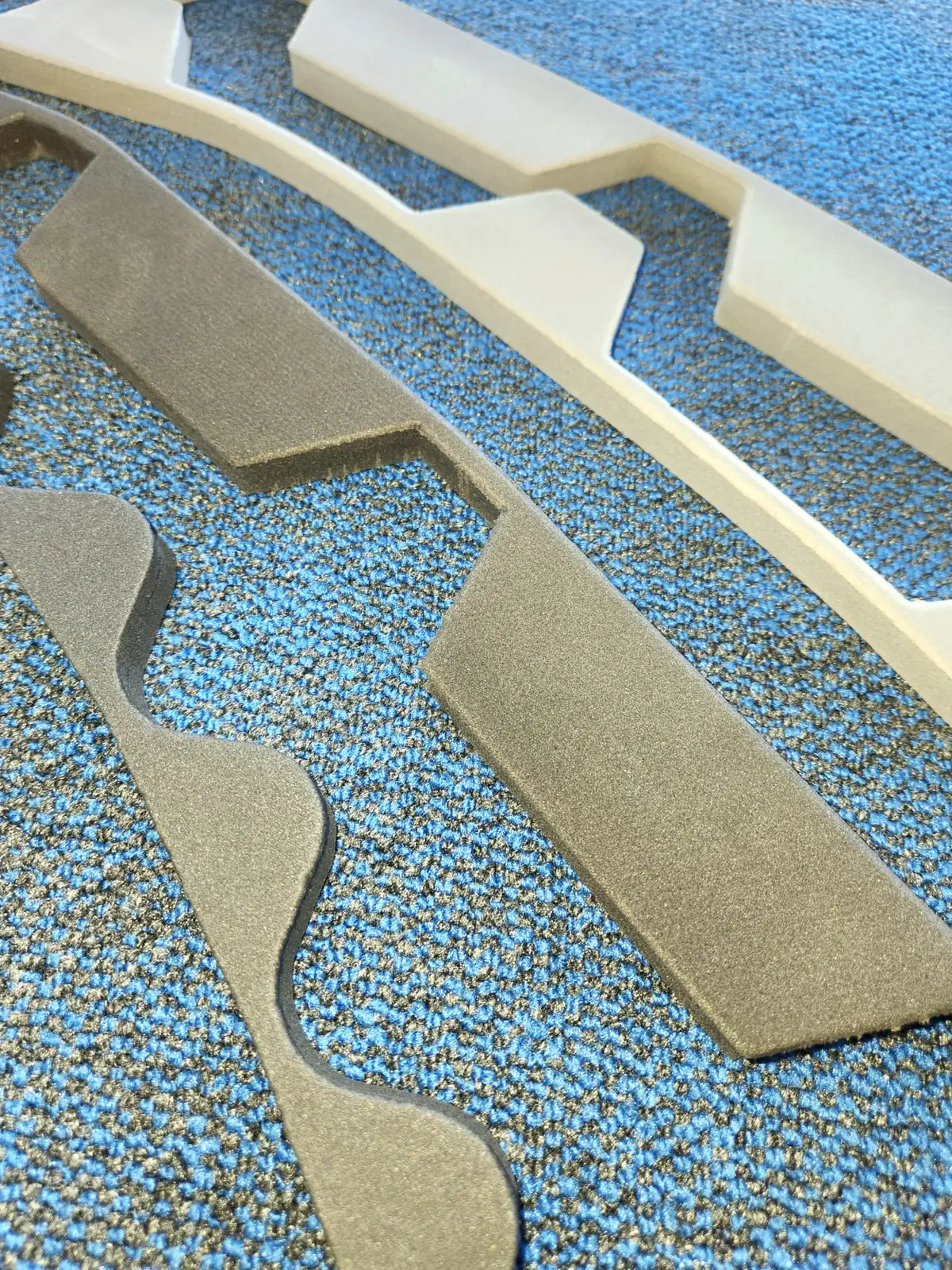
Roof closures are the shaped foam or rubber strips that fill the gap between a profiled roof sheet and the purlin, ridge or flashing it meets. On an IBR profile that gap is a repeating run of trapezoidal openings, and every one of them is an invitation to wind driven rain, dust, insects and birds.
Fitting them is quick. Fitting them properly is what decides whether the roof still seals in five years. Here is how it is done and where installations usually go wrong.
What you need before you start
Installing IBR roof closures, step by step
1. Measure and cut the run. Lay the closure along the sheet and mark the length. Cut it with a sharp blade in one clean stroke. A ragged cut leaves a gap at the join, and joins are where closures fail first, so use the longest pieces you can.
2. Dry fit before you peel anything. Press the closure into the profile without removing the adhesive backing and check that every rib and valley lines up. If it does not, you have either the wrong profile or the closure the wrong way round.
3. Clean the contact surface. Wipe the purlin or flashing where the closure will sit. Dust on a roof sheet is invisible from a metre away and is enough to stop the adhesive taking.
4. Fit from one end, do not stretch. Peel the backing progressively and press the closure down as you go. Stretching the strip to make it reach is the single most common installation error. Foam that has been stretched pulls back over the following weeks and opens a gap at both ends.
5. Butt the joins, do not overlap. Where two lengths meet, cut both ends square and push them together. An overlap lifts the sheet and creates a leak path on both sides of the join.
6. Fix the sheet down promptly. The closure is designed to be compressed by the sheet and its fixings. Left uncompressed in the sun it will take a set, so fit the sheeting the same day rather than leaving closures exposed.
Where installations go wrong
Stretching to save a length. Covered above because it causes more callbacks than everything else combined. Order enough closure to run the length without tension.
Using the wrong side up. Top and bottom closures are cut as mirror images. Fitting one upside down leaves the profile gap open and the flat face pressed against the sheet, which looks fitted from below and seals nothing.
Skipping the closure on the ridge. The ridge is the highest pressure point on the roof for wind driven rain. It is also the one people leave out because the flashing looks like it covers the gap. It does not.
Choosing on price alone. A closed cell foam closure holds its shape and resists water. An open cell offcut is cheaper, soaks up water and compresses permanently within a season. On a roof, the labour to replace it costs many times the material saving.
Foam or rubber?
Most IBR closures are cut from closed cell polyethylene or EVA foam. Closed cell is the important part: the bubbles are sealed, so the strip does not absorb water and does not lose its shape after repeated wetting and drying.
EPDM rubber closures cost more and are specified where the roof sees severe ultraviolet exposure or where the closure is partly visible and has to hold up cosmetically for decades. For the majority of IBR roofs in South Africa, a closed cell foam closure cut to the correct profile does the job for the life of the sheeting.